Support our educational content for free when you purchase through links on our site. Learn more
15 Tips for Packing Early Before Moving 📦

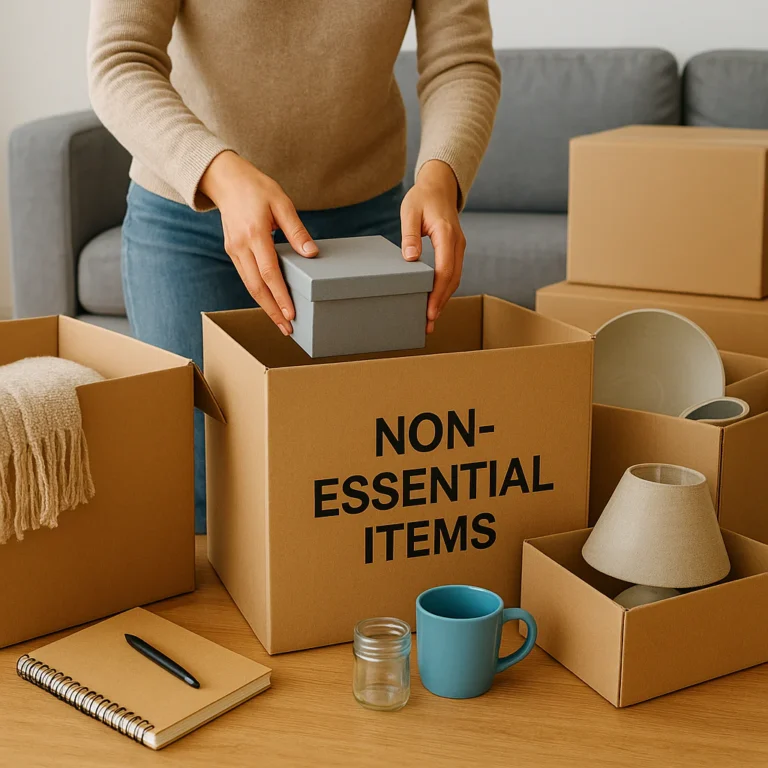
What are some tips for packing non-essential items 7 weeks before moving to get a head start? Begin with belongings you won’t need before moving day—think seasonal décor, extra linens, finished books, and rarely used hobby gear. Declutter first, pack a few boxes at a time, and label each box with its room and contents.
We’ve seen a well-meant early start go sideways when someone packed every kitchen utensil except the one needed to open the next box. The trick is to get ahead without making the next seven weeks harder: keep daily essentials accessible, store boxes somewhere dry and safe, and track what you’ve packed with a checklist.
Key Takeaways
- Start with true non-essentials: Pack seasonal items, décor, books you’ve finished, spare linens, and inactive hobby supplies.
- Declutter before boxing: Donate, sell, recycle, or discard items you don’t want to move.
- Pack by room and label clearly: Include the destination room and a short contents list on each box.
- Keep daily-use items out: Set aside medication, documents, chargers, work supplies, and everyday kitchen and bathroom essentials.
- Store boxes safely: Keep them dry, stable, and out of walkways; place heavier boxes below lighter ones.
- Track progress as you go: Use an inventory or checklist app so you can find packed items without opening every box.
Table of Contents
- ⚡ Quick Tips and Facts
- 📦 Why Start Packing Non-Essentials Seven Weeks Before Moving?
- 🗓️ Your Moving Packing Timeline: What to Pack and When
- What to Pack Seven Weeks Before Moving
- What to Pack Six to Four Weeks Before Moving
- What to Pack Three to Two Weeks Before Moving
- What to Pack One Week Before Moving
- What to Pack the Day Before You Move
- What to Pack Last on Moving Day
- ✅ 15 Smart Tips for Packing Non-Essential Items Early
- 1. Define What “Non-Essential” Means for Your Household
- 2. Start with Seasonal Clothing and Gear
- 3. Pack Books, Decor, and Display Items
- 4. Sort Hobby Supplies and Rarely Used Equipment
- 5. Declutter Before You Box Anything
- 6. Create a Keep, Donate, Sell, and Discard System
- 7. Pack by Room and Category
- 8. Use the Right Moving Boxes and Packing Materials
- 9. Protect Fragile and Valuable Belongings
- 10. Label Boxes for Easy Unpacking
- 11. Keep a Moving Inventory
- 12. Store Packed Boxes Safely
- 13. Set Aside Items You’ll Need Before Moving Day
- 14. Pack Responsibly: Donate, Recycle, or Dispose
- 15. Adjust Your Packing Plan for Kids, Pets, and Roomates
- 🏠 What to Pack First, Room by Room
- Guest Room and Storage Areas
- Living Room and Home Office
- Kitchen Items You Rarely Use
- Bedrooms, Closets, and Linen Cupboards
- Garage, Basement, and Attic Belongings
- 🧰 Moving Supplies for Early Packing
- 📋 A Seven-Week Moving Checklist and Weekly Packing Plan
- 🚫 Items You Shouldn’t Pack Seven Weeks Ahead
- ⏰ Is It Too Early to Start Packing for a Move?
- 💡 Common Early-Packing Mistakes to Avoid
- Conclusion
- Recommended Links
- ❓ FAQ
- What counts as a non-essential item when moving?
- How many boxes should I pack seven weeks before moving?
- Can I pack clothes weeks before moving day?
- How should I label boxes for an easier move?
- Where should I store packed boxes before moving?
- What should I keep out until the last minute?
- Reference Links
⚡ Quick Tips and Facts
Seven weeks before moving is a sweet spot for packing the things you can live without—not a reason to wrap your coffee maker and start drinking optimism for breakfast. We recommend starting with a small, clearly defined batch, then adding a little packing time to your weekly routine. For the rest of your seven-week move prep, see our guide to what to do seven weeks before moving.
| Quick fact | What it means for your move |
|---|---|
| Start with low-use items | Pack seasonal gear, decorations, books you’ve finished, and hobby supplies you won’t need before moving day. |
| Declutter before boxing | Decide what to keep, donate, sell, recycle, or discard before spending time and packing materials on it. |
| Label for both people and boxes | Put the destination room in large letters and list the main contents on the side. |
| Keep essentials accessible | Leave daily-use items, medication, important documents, valuables, and a few basic kitchen and bathroom supplies unpacked. |
| Store boxes dry and safely | Keep cartons off damp floors, away from heat and pests, and avoid putting heavy boxes on fragile ones. |
| Use a checklist, not your memory | Track each packing task and box so your “miscellaneous” carton doesn’t become an archaeological mystery. |
A practical first batch might include holiday décor, extra linens, out-of-season clothing, board games, and books you won’t reread before the move. If you’re unsure about an item, ask: Will I need it in the next seven weeks? If not, it may be a good early-packing candidate.
- ✅ Pack early: Guest-room extras, decorative items, spare dishes, collectibles, and seasonal equipment you won’t use.
- ❌ Keep out: Daily clothes, work equipment, essential cookware, toiletries, medication, chargers, and documents.
- ✅ Make progress manageable: Pack a few boxes at a time and update your moving checklist app as you go.
- ❌ Don’t pack just to hit a box quota: A box of unwanted clutter is still clutter—only now it has tape.
For more practical DIY moving tips and home organization advice, start with the spaces you use least. Your guest room may be ready to help long before your kitchen is.
📦 Why Start Packing Non-Essentials Seven Weeks Before Moving?
Packing a little at a time spreads the work across several weeks, gives you a chance to sort belongings thoughtfully, and makes moving day less of a frantic box-making marathon. Seven weeks is especially useful for items that are out of season, rarely used, or purely decorative.
Advice about exactly when to begin varies. Homes & Gardens recommends starting around eight weeks out and says seven weeks is a good time to “slow and prep smart.” The MoveAdvisor packing timeline takes a broader view, advising readers to start preparing early and pack items they can do without first. Those recommendations aren’t really at odds: preparing and decluttering can start earlier than boxing up household essentials. At seven weeks, we’d begin packing carefully selected non-essentials while leaving daily-use spaces functional.
| Approach | What it’s best for | Our take |
|---|---|---|
| Start preparing as early as possible | Planning, sorting, gathering supplies, and arranging donations | ✅ Helpful—preparation doesn’t mean living among boxes for months. |
| Begin packing non-essentials about 4–8 weeks ahead | Seasonal belongings, décor, collections, spare items | ✅ A sensible window for many households. |
| Pack everything as early as possible | Emptying the home well ahead of the move | ❌ Usually impractical if you still need most of your belongings. |
Packing early also gives you time to notice what you own. That’s useful when deciding what deserves space in the moving truck—and what could be donated instead. Our decluttering advice can help you sort without turning every old birthday card into a three-hour committee meeting.
One caveat: don’t pack things you’ll need before moving day, even if they look non-essential on paper. A winter coat might be safely boxed in July; it’s not a good candidate if a cold snap is forecast next week.
🗓️ Your Moving Packing Timeline: What to Pack and When
A timeline works best when it’s flexible. Weather, work schedules, children, pets, and the size of your home can all change what “non-essential” means. Use this as a starting plan, then adjust it to your household and move date.
| When | Packing focus | Keep accessible |
|---|---|---|
| Seven weeks before | Seasonal items, decorations, spare linens, books, collectibles, seldom-used hobby gear | Daily clothing, essential work and school supplies, medication |
| Six to four weeks before | Guest room extras, rarely used kitchenware, home-office overflow, storage areas | Enough dishes, cookware, and supplies for normal routines |
| Three to two weeks before | Most décor, extra clothing and shoes, remaining books and nonessential equipment | A practical wardrobe, everyday kitchen items, cleaning supplies |
| One week before | Most remaining belongings, leaving a small set of essentials | A clearly marked essentials box and personal travel bags |
| Day before | Last items you can live without, final household packing | Phone chargers, toiletries, medication, documents, basic tools |
| Moving day | The final daily-use items after you’re done with them | Anything traveling with you personally |
What to Pack Seven Weeks Before Moving
Start with belongings you won’t need during the weeks ahead:
- Holiday decorations and seasonal display items
- Off-season clothing, shoes, and sports gear
- Extra towels, bedding, and guest-room linens
- Books you’ve already read and won’t need for work or school
- Board games, puzzles, DVDs, and hobby supplies you’re not currently using
- Decorative vases, picture frames, candles, and display pieces
- Collections and keepsakes, after making thoughtful decisions about what to keep
- Specialized tools or equipment you won’t need before the move
- Spare serving dishes, extra glasses, and formal tableware
Pack gradually instead of clearing an entire room all at once. A guest bedroom can be a good starting point, but keep a bed and basic linens available if someone may visit—or if you need a quiet spot to stage packing supplies.
What to Pack Six to Four Weeks Before Moving
At this stage, continue through less-used spaces and extras:
- Guest-room furniture contents and remaining decorations
- Additional kitchen items, such as specialty pans and serving platers
- Home-office books, spare stationery, and equipment you can do without
- More seasonal clothing and accessories
- Storage-area belongings that are already sorted and clean
- Extra toys and games that aren’t part of everyday play
Keep the home usable. If you have one casserole dish that everyone loves, it stays out until later—no matter how beautiful the box looks.
What to Pack Three to Two Weeks Before Moving
As the move gets closer, pack items you use occasionally but can now manage without:
- Most wall art and decorative accessories
- Remaining books and media
- Extra shoes, bags, and clothing
- More kitchen equipment, while keeping a basic cooking setup
- Nonessential electronics and accessories
- Remaining hobby supplies and toys that aren’t in active rotation
Review your labels and inventory as you go. If a box is marked only “stuff,” future-you may have to conduct a small expedition to find a kettle.
What to Pack One Week Before Moving
Pack most remaining belongings, but leave out a compact, deliberate set of daily essentials:
- A week’s worth of clothing and work or school supplies
- Basic toiletries and towels
- Everyday dishes, a few cooking tools, and simple food supplies
- Cleaning products you’ll need for the last sweep
- Phone chargers, medications, and important paperwork
Set aside an essentials box for the first night, but keep anything valuable or sensitive—such as passports, important documents, jewelry, and medication—with you rather than on the moving truck.
What to Pack the Day Before You Move
The day before moving is for final checks, not a surprise packing marathon. Pack the last items you won’t need overnight, confirm box labels, and keep your essentials separate. Photograph the backs of electronics before disconnecting them, and put small parts in labeled bags secured to the matching item.
What to Pack Last on Moving Day
Pack daily-use items only after you’re finished with them:
- Bedding, after the last night’s sleep
- Toiletries, after the morning routine
- The final dishes and kitchen tools, after breakfast
- Cleaning supplies, after the final clean
- Chargers and personal items, once they’re no longer in use
Keep personal documents, valuables, medications, keys, and travel essentials with you. For a longer relocation, review our long-distance moving tips.
✅ 15 Smart Tips for Packing Non-Essential Items Early
A little structure now can save a lot of “Where did we put the…” later. Here’s how we pack early without turning the house into a cardboard maze.
1. Define What “Non-Essential” Means for Your Household
Make a simple rule: if you won’t use it before moving day, and it’s staying with you, it may be ready to pack. Then make exceptions for items that are seasonal, work-critical, sentimental, or likely to be needed unexpectedly.
A spare duvet may be non-essential in warm weather, but it becomes essential if the heat fails. Think about your actual next seven weeks, not an imaginary version of them.
2. Start with Seasonal Clothing and Gear
Pack the clothes and equipment that don’t match the current season:
- Winter coats and boots during warm months
- Summer clothes and beach gear during cold months
- Ski gear, camping equipment, or sports equipment you won’t use
- Extra shoes, bags, and occasion wear
Leave a small weather-ready selection out. Forecasts have a sense of humor, and they are rarely helpful.
3. Pack Books, Decor, and Display Items
Books you’ve finished, decorative trays, framed prints, and display objects often make good early boxes. Wrap fragile décor with clean packing paper or soft household textiles, and place heavier books in smaller cartons to make lifting safer.
For more ideas on sorting and storing household belongings, browse our home organization guides.
4. Sort Hobby Supplies and Rarely Used Equipment
Pack supplies for hobbies you won’t work on before moving, such as seasonal crafts or specialized equipment. Keep active projects together in a clearly labeled container so you don’t accidentally box the one set of supplies you need this weekend.
Check the item’s condition and whether it can be moved safely. Some equipment or materials need special handling or should not go on a moving truck.
5. Declutter Before You Box Anything
Before packing a shelf or closet, take everything out and sort it. Moving a box of things you don’t want is work that follows you all the way to the new home.
Use the EPA’s reuse and donation guidance to consider options for items still in usable condition. For more ideas, see our decluttering advice.
6. Create a Keep, Donate, Sell, and Discard System
Set up four clearly marked destinations:
- Keep: Pack or leave in use until later.
- Donate: Set aside clean, usable items and confirm that a local organization accepts them.
- Sell or give away: Choose a deadline so listings don’t become permanent residents.
- Discard or recycle: Check local rules for electronics, batteries, paint, and other restricted materials.
Keep donations out of the packing zone. Otherwise, they may be taped into a carton and accidentally moved anyway.
7. Pack by Room and Category
Grouping boxes by both room and category makes them easier to unload and unpack. “Guest room—extra bedding” is more useful than “bedroom stuff.” Finish one small zone before beginning another, but don’t force yourself to empty a functional room weeks early.
8. Use the Right Moving Boxes and Packing Materials
Choose clean, sturdy cartons in appropriate sizes. Use smaller boxes for heavy items such as books, and larger cartons for light, bulky belongings such as linens. For fragile items, add cushioning and avoid leaving empty spaces where contents can shift.
Useful supplies include:
- Sturdy boxes in several sizes
- Strong packing tape and a dispenser
- Markers and labels
- Packing paper or clean household textiles
- Bubble wrap® for appropriate fragile items
- Resealable bags for small parts
- Furniture blankets or protective covers for larger pieces
Drawback to watch: oversized boxes can become awkward or dangerously heavy. A box is only “efficient” until someone has to lift it.
9. Protect Fragile and Valuable Belongings
Pad the bottom and sides of a carton, wrap each delicate item, and fill gaps so nothing rattles. Avoid putting fragile pieces beneath heavy belongings. If you’re using towels or linens as padding, make sure they’re clean and dry.
The Federal Motor Carrier Safety Administration recommends researching movers and understanding your moving agreement. For high-value or unusually fragile items, ask your mover how they should be packed and whether they require special handling.
10. Label Boxes for Easy Unpacking
Write the destination room in large letters on the top, then list the main contents on a side. For example:
GUEST ROOM
Holiday décor, picture frames
FRAGILE — TOP LOAD
Simple, readable labels help household members and movers place boxes quickly. A video contributor advises against overcomplicated color-coding because it can confuse helpers; we agree that clear words should be the foundation. Colors can be an extra, not the only clue.
11. Keep a Moving Inventory
Track each box with a short ID, room, contents, and status. A spreadsheet works; so does the Moving Checklist™ app if you prefer to keep moving tasks and progress together.
Example:
| Box ID | Room | Main contents | Status |
|---|---|---|---|
| G-01 | Guest room | Extra bedding | Packed |
| L-02 | Living room | Framed prints | Packed—fragile |
| K-01 | Kitchen | Specialty serving pieces | Not packed |
An inventory is especially helpful for long-distance moves, storage, or households with several people packing at once.
12. Store Packed Boxes Safely
Choose a dry, low-traffic storage area away from heat, leaks, and pests. Keep boxes off the floor if there’s a risk of dampness, and stack heavier cartons below lighter ones. Never stack heavy boxes on top of fragile items, and leave clear pathways to doors, stairs, and essential rooms.
If you’re storing boxes in a garage, attic, basement, or storage unit, consider the effects of temperature and humidity on books, electronics, photographs, fabrics, and collectibles. Valuable or sensitive belongings may need a more stable indoor space.
13. Set Aside Items You’ll Need Before Moving Day
Mark a “do not pack yet” zone, basket, or shelf for things that need to stay accessible:
- Medication and first-aid supplies
- Daily toiletries and towels
- Work and school equipment
- Chargers and commonly used electronics
- Important documents and keys
- Basic cookware and dishes
- Cleaning supplies for the final clean
A bright note on the door or shelf can stop well-meaning helpers from packing the last roll of toilet paper. It is not glamorous, but it is memorable.
14. Pack Responsibly: Donate, Recycle, or Dispose
Don’t assume everything belongs in household trash. Check local guidelines for electronics, batteries, paint, chemicals, and other items that may need special disposal. The EPA’s recycling basics explain why local options and accepted materials matter.
Before arranging donations, verify the organization’s current needs and drop-off requirements. Donation centers can’t always accept every item, even if it’s in good condition.
15. Adjust Your Packing Plan for Kids, Pets, and Roomates
For children, keep favorite toys, comfort items, books, and a few familiar routines available. For pets, leave food, medications, leashes, carriers, and bedding accessible. Roomates should label personal belongings clearly and agree on shared-item decisions before packing begins.
If other people are helping, share the same simple labeling rules and inventory system. One household, one labeling language. “Kitchen” and “KITCHEN-ish” should not require a translation service.
🏠 What to Pack First, Room by Room
Start in spaces that have the most things you can do without. A room-by-room approach prevents the classic moving-week discovery: five half-packed rooms and no idea where the tape went.
Guest Room and Storage Areas
Pack extra linens, display items, spare furniture contents, seasonal belongings, and storage bins you’ve already sorted. Keep one usable guest bed and a basic set of linens if needed. In garages and sheds, identify tools and equipment you may still need for repairs or yard work before packing them.
Living Room and Home Office
Pack books, media, collections, decorative objects, and office supplies you won’t need. Keep your working setup, essential files, and necessary electronics available until you’re ready to disconnect them.
Before unpluging electronics, photograph cable connections and put small accessories in labeled bags secured to the matching device. This saves time when you set up again—and avoids the “mystery cord” drawer gaining a new generation.
Kitchen Items You Rarely Use
Start with formal serving dishes, specialty appliances, extra glasses, and seasonal equipment. Keep a basic set of dishes, cutlery, cookware, and food-preparation tools until closer to moving day.
Wrap breakable items individually and use clean towels or linens as padding when suitable. Don’t use textiles that are damp, soiled, or likely to transfer dye.
Bedrooms, Closets, and Linen Cupboards
Pack off-season clothing, spare bedding, extra shoes, and accessories you won’t use. Leave enough clothes for the weeks ahead, plus a few weather-appropriate options. Keep daily-use bedding until the last night.
Garage, Basement, and Attic Belongings
Begin by sorting, not boxing. These spaces often hold forgotten belongings, items that need special disposal, or things that shouldn’t be transported. Check your mover’s rules for hazardous materials and consult the FMCSA moving guidance if you’re hiring an interstate mover.
🧰 Moving Supplies for Early Packing
Get the basics together before you start, but don’t buy supplies for belongings you may donate or discard. For fragile or specialty items, ask your mover whether they recommend particular packing methods.
| Supply | Best use | Tip |
|---|---|---|
| Sturdy moving boxes | General household belongings | Match box size to item weight. |
| Packing tape | Sealing cartons | Use enough tape to secure seams; don’t rely one short strip. |
| Permanent markers | Clear box labels | Write on at least two sides and the top. |
| Packing paper | Wrapping and filling gaps | Use clean material for dishes and delicate items. |
| Bubble wrap® | Fragile or unusually shaped items | Protect and secure the wrap so items don’t shift. |
| Resealable bags | Screws, cables, and small parts | Label the bag and attach it to its matching item. |
| Furniture blankets | Protecting furniture | Keep pieces dry and secure blankets for transport. |
| Clear bags | Linens and clothing you want to identify | Avoid black bags for belongings that might be mistaken for trash. |
The video perspective mentioned earlier recommends using household textiles such as socks, towels, blankets, and sheets as padding, and using clear bags for clothing to avoid confusion. That can be useful for suitable items, but fragile belongings still need secure, appropriate protection. Reusing what you own is sensible; improvising without regard to fragility is not.
A few commonly available options include Duck Brand packing tape, Scotch packing tape, U-Haul moving boxes and supplies, and Sharpie permanent markers. Always check the product’s intended use and the manufacturer’s directions.
- Moving boxes: Amazon | U-Haul
- Packing tape: Amazon | Duck Brand
- Moving labels: Amazon
- Permanent markers: Amazon | Sharpie
📋 A Seven-Week Moving Checklist and Weekly Packing Plan
Use this as a flexible weekly plan. It mixes packing with sorting and setup tasks so you’re not surrounded by boxes but still looking for a mover.
| Week | Packing and planning focus | A realistic win |
|---|---|---|
| 7 weeks out | Gather supplies, set up an inventory, sort seasonal items and décor | Pack a few clearly labeled non-essential boxes |
| 6 weeks out | Pack guest-room extras and rarely used belongings; schedule donations | Clear one small storage zone |
| 5 weeks out | Pack books, collections, spare linens, and inactive hobby supplies | Review the inventory and identify fragile items |
| 4 weeks out | Continue through storage and less-used household areas | Confirm what remains essential |
| 3 weeks out | Pack extra clothing, décor, and specialty kitchen items | Keep everyday rooms usable |
| 2 weeks out | Pack remaining low-use items; check arrangements with your mover | Prepare an essentials list |
| 1 week out | Pack most remaining belongings and organize personal travel bags | Keep one “do not pack” area |
| Day before and moving day | Pack final daily-use items after you’re done with them | Keep valuables and key documents with you |
For each packing session:
- Pick one small area. A shelf or closet is better than “the whole house.”
- Sort first. Decide what stays, goes, or needs special handling.
- Pack by room and category.
- Label and record the box immediately.
- Store it safely and update your checklist.
The MoveAdvisor packing timeline recommends planning, inventorying belongings, and setting realistic packing goals. We agree with the principle: progress is easier to sustain when the task is small enough to finish.
🚫 Items You Shouldn’t Pack Seven Weeks Ahead
Avoid packing anything you’re likely to need during the next seven weeks, including:
- Everyday clothes, shoes, and outerwear for the current season
- Daily-use kitchenware and appliances
- Medication, first-aid supplies, and personal-care essentials
- Work, school, or caregiving equipment
- Important documents, keys, jewelry, and valuables
- Pet supplies and children’s comfort items
- Tools needed for ongoing repairs or maintenance
- Items that may be prohibited or restricted by your moving company
Ask your mover about items they will not transport, especially hazardous materials and other restricted goods. For interstate moves, the FMCSA’s Protect Your Move resources can help you understand mover selection and consumer protections.
⏰ Is It Too Early to Start Packing for a Move?
It’s not too early to plan, declutter, and gather supplies. It can be too early to pack belongings you still rely on every day. That’s why sources can appear to disagree: Homes & Gardens highlights beginning around eight weeks out, while MoveAdvisor urges readers to start preparing early and pack what they can do without. One is talking about a practical packing window; the other emphasizes getting organized early.
Our recommendation: start preparing whenever you like, and begin boxing non-essentials when you can store them safely and comfortably live without them. Seven weeks gives many households enough runway to work in batches without turning the home into a storage unit.
💡 Common Early-Packing Mistakes to Avoid
- Packing before decluttering: Sort first so you don’t move unwanted belongings.
- Overpacking large boxes: Heavy, awkward cartons can be difficult to lift and more prone to damage.
- Using vague labels: “Miscellaneous” is not a contents list.
- Stacking boxes carelessly: Put heavier boxes below lighter ones and protect fragile cartons.
- Leaving no essentials accessible: Keep daily needs in a designated area.
- Using black trash bags for items you’re keeping: Helpers may mistake them for rubbish; clear or clearly labeled bags are safer.
- Packing a whole working room too soon: Keep enough furniture and supplies to make daily life possible.
- Forgetting small parts: Photograph electronics and furniture connections, and secure labeled bags of screws or cables to the matching item.
- Ignoring storage conditions: Keep packed belongings clean, dry, and away from pests.
- Assuming every item can go on the truck: Check restrictions with your mover before packing potentially prohibited items.
The video contributor’s simple advice—keep a donation box and trash bag nearby while sorting—is useful, provided you clearly distinguish discards from belongings you’re keeping. And one last tease from the packing-table trenches: the box that seems least important today is often the one you’ll hunt for first after arrival. That’s why the label and inventory matter as much as the tape.