Support our educational content for free when you purchase through links on our site. Learn more
7 Weeks to Move? Build a Checklist That Works 📦

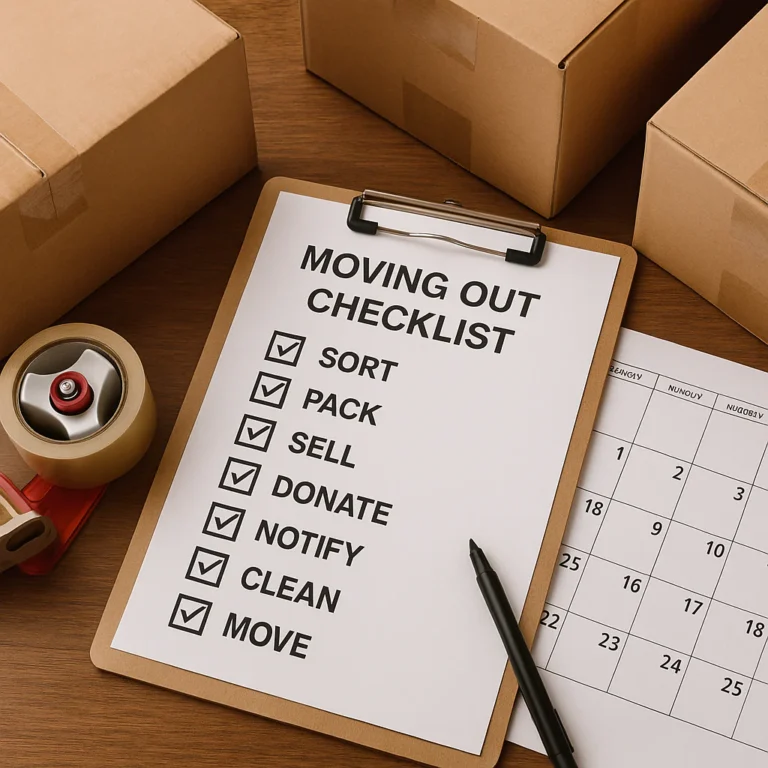
To answer “How do I create a moving checklist to stay organized and on track 7 weeks before the move?”: choose one planning hub, set your moving date and deadlines, then break the work into small tasks with clear owners. Start now with the decisions that affect everything else: how you’ll move, what you’ll take, and when you need to book help.
We’ve seen a move go sideways because one tiny detail got overlooked: nobody reserved the building’s elevator. The boxes were ready; the elevator wasn’t. A checklist that tracks logistics as well as packing can help you catch those surprises while there’s still time to fix them.
Key Takeaways
- Use one source of truth: Keep tasks, deadlines, mover details, and documents together in an app, spreadsheet, or binder.
- Start with high-impact decisions: Set your budget and date, choose a moving method, and compare movers early.
- Break the move into bite-size tasks: Give each task a due date and an owner, then review your checklist weekly.
- Declutter before packing: Sort belongings room by room and measure large furniture against the new home’s access points.
- Plan beyond moving day: Add utilities, address changes, care arrangements, and first-week essentials to your timeline.
Table of Contents
- ⚡️ Quick Tips and Facts
- 🧭 Why Start Your Moving Checklist Seven Weeks Early?
- 📋 How to Build a Moving Checklist That Keeps You on Track
- Choose a Checklist Format That Works for You
- Set Up a Moving Binder, Spreadsheet, or App
- Turn Big Moving Tasks Into Small, Dated Actions
- 🗓️ Your Seven-Week Moving Checklist: Start Here
- 1. Set Your Moving Budget and Target Date
- 2. Choose Between DIY and Professional Movers
- 3. Research and Compare Moving Companies
- 4. Declutter and Decide What’s Coming With You
- 5. Create a Household Inventory and Room-by-Room Plan
- 6. Start Gathering Moving Supplies
- 7. Plan for Kids, Pets, Plants, and Special-Care Items
- 📦 Moving Checklist Timeline: What to Do From Six Weeks to Moving Day
- Six Weeks Before: Book Movers and Begin Packing
- Five Weeks Before: Handle Schools, Records, and Important Services
- Four Weeks Before: Update Your Address and Confirm Logistics
- Three Weeks Before: Pack Nonessentials and Arrange Utilities
- Two Weeks Before: Confirm Details and Prepare Essentials
- One Week Before: Finish Packing and Protect Your Home
- Moving Day: Follow Your Moving-Day Checklist
- 🚚 DIY vs. Professional Moving: Pick the Right Plan
- When a DIY Move Makes Sense
- When Hiring Professional Movers Is Worth It
- Questions to Ask Before Booking a Moving Company
- 🏠 After the Move: Your First Five Weeks in the New Home
- First Week: Unpack Essentials and Check Your Home
- Weeks Two to Three: Update Records and Setle In
- Week Four and Beyond: Finish Unpacking and Make It Feel Like Home
- 🧠 Moving Checklist Tips for Staying Organized and Reducing Stress
- How to Prioritize Tasks When Your Schedule Changes
- Common Moving Checklist Mistakes to Avoid
- Last-Minute Moving Stress-Savers
- ❓ Moving Checklist FAQ
- What should I do seven weeks before moving?
- How do I organize a moving checklist?
- Is seven weeks enough time to plan a move?
- What should I pack first when moving?
- How often should I update my moving checklist?
- ✅ Conclusion
- 🔗 Recommended Links
- 📚 Reference Links
⚡️ Quick Tips and Facts
If you’re looking for the first steps, our guide to what to do 7 weeks before moving goes deeper on this make-or-break planning window. At Moving Checklist™, we’ve learned that seven weeks out is the moment to turn a vague “we should probably start packing” into a manageable, dated plan.
| Seven-week priority | Your next move | Why it helps |
|---|---|---|
| Create one planning hub | Use a binder, spreadsheet, or checklist app | Keeps quotes, dates, receipts, and contacts together |
| Set the moving date and budget | Confirm the date, time off, and spending limits | Lets you compare realistic moving options |
| Decide how you’ll move | Compare professional movers, a rental truck, or a hybrid move | Prevents last-minute booking stress |
| Start an inventory | List what you’re taking and note oversized or fragile items | Helps estimate shipment size and plan rooms |
| Declutter before packing | Donate, sell, recycle, or give away items you won’t move | Fewer belongings mean less to pack and track |
| Add deadlines and reminders | Put each task on a calendar with an owner | Turns intentions into actions you can finish |
A good checklist is more than a list. It’s a timeline, a record of decisions, and a way to see what’s next without keeping the entire move in your head. A calendar app such as Google Calendar can handle deadlines, while a moving-focused tool such as the Moving Checklist™ app can help organize tasks by stage.
Our seven-week rule: Every task needs a next action, a due date, and—if you share the move—a person responsible for it. “Look into movers” is fog. “Ask three licensed movers for written estimates by Friday” is a plan. ✅
A little early housekeeping matters too. If you’re moving across state lines, verify an interstate mover through the Federal Motor Carrier Safety Administration (FMCSA). The agency also provides consumer information about moving.
🧭 Why Start Your Moving Checklist Seven Weeks Early?
Seven weeks gives you room to make decisions before the calendar starts making them for you. You can compare moving services, check building rules, sort belongings, and arrange records and time off without turning every evening into a packing emergency.
Moving checklists from Move.org and United Van Lines both emphasize getting organized early and keeping key details together. That advice holds up in practice: the earlier you spot a problem, the more options you usually have to solve it.
What seven weeks gives you time to handle
- Booking and estimates: Contact movers, compare services, and ask what the estimate includes.
- A realistic inventory: Identify items that need special handling or won’t fit in your new home.
- Decluttering: Arrange donations, sales, recycling, or bulky-item pickup before packing begins.
- Move logistics: Check parking, elevators, access hours, stairs, and any building requirements.
- Life admin: Request school and medical records, discuss work leave, and plan for pets or children.
- A flexible schedule: Spread tasks over several weeks instead of loading everything into the final weekend.
Moving in less than seven weeks? Don’t panic or try to cram an eight-week template into a heroic weekend. United Van Lines recommends adapting its checklist to the time available. Keep the same priorities—secure transportation, protect important records, reduce what you’re moving, and confirm dates—then shorten the timeline and do high-impact tasks first.
We once saw a family spend days comparing storage options before confirming whether their new apartment had a freight elevator reservation. The apartment did—but bookings filled quickly. A five-minute call early would have saved a week of uncertainty. That’s why logistics belong near the top of your checklist, not at the bottom.
📋 How to Build a Moving Checklist That Keeps You on Track
A checklist works when you can answer three questions at a glance:
- What needs to happen?
- When is it due?
- Who is handling it?
Keep the system simple enough that you’ll actually use it. A beautifully color-coded spreadsheet is not useful if nobody opens it after Tuesday.
Choose a Checklist Format That Works for You
Pick one main system—not five competing lists spread across sticky notes, texts, and the back of a grocery receipt.
| Format | Best for | Strengths | Watch-outs |
|---|---|---|---|
| Moving checklist app | Shared, deadline-heavy moves | Tasks, reminders, progress tracking, and mobile access | Confirm that everyone uses the same account or shared list |
| Spreadsheet | People who like flexible columns | Easy to sort by date, room, owner, and status | Reminders may need to be added separately |
| Paper binder | People who prefer printed records | Handy for documents, notes, and in-person estimates | Can’t automatically alert you to a deadline |
| Calendar plus task list | Moves with lots of appointments | Dates are visible beside work and family commitments | Keep addresses, quotes, and inventory somewhere else |
A hybrid setup often works best: one digital task list for deadlines and one folder for documents. If you prefer paper, use a binder with clearly labeled sections and photograph essential pages for backup.
For more practical household systems, see our home organization advice.
Set Up a Moving Binder, Spreadsheet, or App
Create these sections in your chosen hub:
- Timeline and deadlines: Moving day, packing sessions, utility dates, lease or closing milestones.
- Mover research: Company names, written estimates, license information, insurance questions, and contact details.
- Inventory: Room, item, condition, box number, and special instructions.
- Documents: Lease or closing papers, insurance information, estimates, receipts, and relevant records.
- Address and utilities: Who to notify, when service ends, and when new service begins.
- People and plans: Helpers, childcare, pet care, building contacts, and travel arrangements.
- New-home setup: Measurements, furniture needs, access details, and early repair notes.
For a shared digital folder, Google Drive and Dropbox are practical options; both let you keep documents together and access them from a phone. Avoid storing sensitive personal information in a broadly shared folder. Share only what the right person needs.
Make the checklist easy to scan
Use a consistent set of labels:
- Not started
- In progress
- Waiting on someone
- Done
Add a due date to anything with a deadline. For tasks involving another person—such as getting a landlord’s instructions—mark who is following up and when.
Turn Big Moving Tasks Into Small, Dated Actions
Break “plan move” into actions you can complete in one sitting:
| Too vague | Checklist-ready version |
|---|---|
| Find movers | Contact three movers and request written estimates by Friday |
| Pack the kitchen | Pack rarely used serving dishes and label the boxes by room |
| Deal with utilities | List current providers and contact each one to ask about move dates |
| Sort clothes | Create keep, donate, sell, and recycle groups for one closet |
| Prepare new home | Measure the sofa and check the doorway dimensions |
Add a buffer date for tasks with outside dependencies. If a school records office or utility provider needs time to respond, don’t schedule your follow-up for the day before the move.
🗓️ Your Seven-Week Moving Checklist: Start Here
The seven-week point is a planning checkpoint, not a command to do everything in one day. Start with decisions that affect other tasks, then work down to the details.
1. Set Your Moving Budget and Target Date
Write down the target date, the date you can access the new home, and any fixed commitments such as a lease end, closing date, school schedule, or work shift.
Build a working budget that accounts for:
- Transportation and labor
- Packing materials
- Storage, if needed
- Travel and accommodation
- Cleaning and repairs
- Utility deposits or setup needs
- Pet, childcare, or elder-care arrangements
- A contingency for unexpected expenses
Don’t compare a full-service quote with a truck rental as if they cover the same job. A rental may exclude labor, packing, fuel, mileage, parking, and time spent driving. Ask what each option includes, then compare the complete plan.
If your employer may help with relocation, ask about eligibility, documentation, and deadlines before assuming reimbursement is available. Keep written confirmation in your moving folder.
2. Choose Between DIY and Professional Movers
A do-it-yourself move offers control and can work well when you have a small shipment, flexible timing, and capable helpers. Professional movers can reduce lifting and coordination, especially for long-distance moves, stairs, large furniture, or limited time.
A hybrid move can be a sensible middle ground: you pack and declutter, then hire labor for loading and transport—or use a portable container and arrange your own packing.
Our advice: Compare the work, not just the headline service. Who packs? Who carries furniture down the stairs? Who drives? Who is responsible if a fragile item is damaged? Get the answers before choosing.
3. Research and Compare Moving Companies
Request written estimates from multiple companies and compare the same inventory and services. FMCSA advises consumers moving across state lines to check a mover’s registration and understand their rights.
Ask each company:
- Is the estimate binding, nonbinding, or a binding not-to-exceed estimate?
- What services are included, and what triggers additional charges?
- Who will perform the move: the company, an agent, or a subcontractor?
- What valuation or liability options are available?
- What is the process for reporting loss or damage?
- Are there restrictions on items they will transport?
- What are the pickup and delivery windows?
- How should you handle building access, parking, and stairs?
For an interstate move, look up the company’s registration using the FMCSA search tool. Review the documents and consumer protections described in FMCSA’s Your Rights and Responsibilities When You Move.
Red flags include: pressure to sign immediately, blank paperwork, vague answers about coverage, or a quote that changes without a clear explanation. ❌
4. Declutter and Decide What’s Coming With You
Moving is a good time to ask whether an item deserves a place in your next home. Work one small area at a time—one shelf, one drawer, or one closet—so sorting doesn’t become an excavation project.
Create four destinations:
- Keep: You use it, need it, or genuinely want it in the new home.
- Donate: It’s in suitable condition and useful to someone else.
- Sell: It has enough resale value to justify the listing and handoff.
- Recycle or discard: It’s broken, unsafe, or not suitable for donation.
Check local donation policies before dropping items off. Some organizations have rules for furniture, electronics, mattresses, or appliances. For more room-by-room strategies, visit our decluttering advice.
Sort with measurements, not wishful thinking
Measure oversized furniture and compare it with doorways, stairwells, elevators, and the destination room. A sofa can fit the living room beautifully and still refuse to pass through the entryway. Measure the route, not just the room.
Set aside items that need special planning, including valuables, medications, important documents, firearms, and delicate or ireplaceable belongings. Ask your mover what they will not transport and plan safe, lawful handling separately.
5. Create a Household Inventory and Room-by-Room Plan
A useful inventory doesn’t need to be a museum catalogue. Record enough to estimate the shipment, direct boxes, and identify important belongings.
| Room | Inventory details to record | Helpful note |
|---|---|---|
| Kitchen | Small appliances, dishes, pantry items | Flag breakables and food that won’t travel |
| Living room | Sofa, tables, TV, lamps, books | Measure large pieces and note disassembly |
| Bedrooms | Beds, dressers, clothing, linens | Identify items needed before moving day |
| Office | Desk, monitors, files, cables | Photograph cable connections before unpluging |
| Garage or storage | Tools, outdoor equipment, boxes | Check mover restrictions and fuel requirements |
Assign box labels that match the inventory, such as KITCHEN-01 or OFFICE-03. Write the destination room and a brief description on more than one side of each box.
If you’re using a spreadsheet, useful columns include:
- Item or box label
- Current room
- Destination room
- Condition
- Fragile or special handling
- Packed status
- Notes or photo link
6. Start Gathering Moving Supplies
Before buying or collecting boxes, estimate how much you’re moving. Smaller, consistent boxes are easier to stack and carry than oversized cartons packed with books—an exercise in human regret.
Common supplies include:
- Small and medium boxes
- Wardrobe boxes if needed
- Packing tape and dispenser
- Paper or other protective packing material
- Markers and labels
- Stretch wrap or furniture covers
- Mattress covers
- Zip bags for screws and furniture hardware
For packing and lifting tips, browse our DIY moving advice. If you choose to collect used boxes, check that they’re clean, dry, sturdy, and free of pests or odors.
Don’t pack prohibited or hazardous materials without checking first. Movers may restrict items such as fuels, chemicals, or other dangerous goods. Ask your mover for its written list, and consult relevant local disposal guidance for anything you can’t transport.
7. Plan for Kids, Pets, Plants, and Special-Care Items
A move is a logistics project, but it’s also a major routine change. Add care plans to the checklist now instead of hoping someone can improvise on moving day.
- Children: Request school records, explain the timeline in age-appropriate language, and plan a safe activity or caregiver for the busiest hours.
- Pets: Ask your veterinarian about records and travel needs; prepare a quiet, secure space away from open doors and loading activity.
- Plants: Check whether your mover or destination has transport restrictions, especially for a long-distance or interstate move.
- Medical needs: Keep prescriptions and essential supplies with you rather than in the moving truck.
- Valuables and documents: Transport ireplaceable items personally when practical and secure.
For a long-distance move, review our long-distance moving guidance and ask your carrier what special arrangements apply.
📦 Moving Checklist Timeline: What to Do From Six Weeks to Moving Day
Your timeline should follow the actual move date, not a perfect calendar template. These checkpoints are a practical sequence; move tasks earlier if you have a long-distance shipment, complex access, a busy season, or a hard lease deadline.
| Timing | Main focus | Checklist checkpoint |
|---|---|---|
| Seven weeks | Organize and decide | Budget, move method, inventory, decluttering |
| Six weeks | Book and prepare | Confirm mover or vehicle, begin records and packing |
| Five weeks | Coordinate people | Schools, work, care plans, storage, travel |
| Four weeks | Confirm services | Address updates, utilities, building arrangements |
| Three weeks | Pack steadily | Nonessentials, labels, supplies, donations |
| Two weeks | Verify details | Mover confirmation, access, essentials plan |
| One week | Finish and protect | Final packing, cleaning, documents, essentials bag |
| Moving day | Direct and document | Walk-through, inventory, access, delivery check |
Six Weeks Before: Book Movers and Begin Packing
- Confirm your chosen mover, rental vehicle, or container.
- Review the written agreement and ask about anything unclear.
- Start packing items you rarely use, such as seasonal décor or specialty cookware.
- Request medical, dental, veterinary, or school records if needed.
- Ask friends or family for help now if you’ll need them later.
- Begin researching storage if the move-in and move-out dates don’t line up.
- Photograph valuable or delicate items before packing.
United Van Lines recommends keeping move-related information centralized in a binder or digital hub; that’s useful whether you hire a national carrier or manage the move yourself. See its moving checklist guidance.
Five Weeks Before: Handle Schools, Records, and Important Services
- Contact schools about enrollment requirements and transcripts.
- Request health records and ask about transferring care.
- Confirm time off with your employer.
- Arrange pet care, childcare, or assistance for family members who need support.
- Decide whether you need short-term storage, travel lodging, or a rental car.
- Continue decluttering and packing nonessentials.
Keep original documents and essential medications in a clearly marked personal bag—not in a carton that might be delivered late.
Four Weeks Before: Update Your Address and Confirm Logistics
Start making a list of organizations that may need your new address:
- Postal service and financial institutions
- Employer and payroll
- Insurance providers
- Schools and medical providers
- Subscriptions and delivery accounts
- Government agencies, where required
For mail forwarding, use the United States Postal Service’s official change-of-address service. Avoid look-alike sites that charge for services you can request directly from USPS.
Contact utility providers about closing service at the old home and starting service at the new one. Confirm dates with both providers; “we thought the other company handled it” is a chilly way to spend your first night.
Also check the new home’s access rules: elevator reservations, parking permits, loading zones, move-in hours, and insurance documents required by building management.
Three Weeks Before: Pack Nonessentials and Arrange Utilities
- Pack décor, books, off-season clothing, and rarely used equipment.
- Label boxes with the destination room and a concise contents description.
- Update your inventory as boxes are sealed.
- Confirm utility activation and shutoff dates.
- Arrange donation pickups or final disposal for items you aren’t taking.
- Photograph electronics and label cable ends before disconnecting them.
- Keep furniture screws and small parts in labeled bags attached to the relevant item when safe.
The first video’s advice is to declutter as you go and pack a suitcase for the first few days. That’s a helpful practical perspective: the suitcase keeps essentials accessible while the rest of your belongings travel in labeled boxes. See the featured video.
Two Weeks Before: Confirm Details and Prepare Essentials
- Reconfirm pickup and delivery details with the mover or rental provider.
- Verify the old and new addresses, access arrangements, and contact numbers.
- Return borrowed items and collect belongings stored elsewhere.
- Set aside important documents, keys, medications, chargers, and daily necessities.
- Confirm care arrangements for children, pets, and anyone who needs help.
- Check that your inventory and special-handling instructions are up to date.
If you have an interstate move, review the mover’s documentation and the FMCSA’s consumer moving guidance before the truck arrives.
One Week Before: Finish Packing and Protect Your Home
- Pack most remaining belongings, leaving out only daily essentials.
- Prepare an essentials bag with a few days of clothes, toiletries, medication, chargers, snacks, and basic kitchen items.
- Keep cleaning supplies and trash bags accessible.
- Confirm payment arrangements and your mover’s arrival window.
- Label any boxes that must be loaded last or unloaded first.
- Plan to defrost and clean appliances according to the manufacturer’s instructions and your mover’s requirements.
- Make a final plan for keys, garage remotes, and building access.
Don’t pack items that you’ll need to safely complete the move, such as medications, critical documents, or a phone charger. A box labeled “ESSENTIALS” is not helpful if it ends up under a mountain of other boxes.
Moving Day: Follow Your Moving-Day Checklist
Before loading:
- Walk through the home and confirm what is being moved.
- Tell the crew about fragile, oversized, or special-care items.
- Keep personal documents, valuables, and medication with you.
- Take photos of the home’s condition if useful for your records.
- Make sure pathways are clear and pets and children are safely supervised.
At the destination:
- Direct boxes to the correct rooms using your labels.
- Check items against the inventory as practical.
- Note visible damage or missing items and follow the mover’s reporting process.
- Keep delivery paperwork and claim information in your moving folder.
- Prioritize the beds, bathroom, medications, and essentials bag before unpacking the decorative teapot collection.
🚚 DIY vs. Professional Moving: Pick the Right Plan
The right approach depends on shipment size, distance, physical ability, schedule, access, and how much of the work you want to manage.
| Move option | Best fit | Advantages | Trade-offs |
|---|---|---|---|
| DIY truck rental | Small moves, flexible dates, capable helpers | More control over packing and timing | You coordinate loading, driving, equipment, and return |
| Professional full-service movers | Large homes, tight schedules, complex moves | Less lifting and a coordinated transport service | Requires careful quote review and clear instructions |
| Portable container | Flexible packing, staged move, some storage needs | Pack on your schedule; transport may be included | Check placement rules, delivery dates, and access |
| Hybrid move | People who want help with the hardest parts | Can combine personal packing with hired labor | You still coordinate multiple pieces |
When a DIY Move Makes Sense
Consider DIY if you have a modest amount to move, a suitable vehicle, reliable help, safe loading access, and enough time to handle the driving and physical work.
Before choosing, account for the full job:
- Vehicle size and reservation
- Moving equipment and protective supplies
- Fuel, mileage, and overnight travel if relevant
- Parking and loading restrictions
- Time to pack, carry, drive, unload, and return equipment
- Whether helpers can safely manage heavy or awkward items
Our DIY moving tips can help you plan the work. If you’re uncertain about lifting, stairs, or a long drive, don’t treat a tough move as a test of character. Hire help for the part that creates the greatest risk.
When Hiring Professional Movers Is Worth It
Professional movers may be a better fit when you have a large shipment, a long-distance route, limited time, heavy furniture, difficult access, or little help available.
Compare service details rather than relying on brand recognition alone. For interstate moves, verify the company using the FMCSA mover search. Read the estimate, check the terms, and ask how the company handles claims and delivery windows.
A reputable mover should be willing to explain the paperwork. If answer sounds like “don’t worry about it,” ask for the explanation in writing.
Questions to Ask Before Booking a Moving Company
- What exactly is included in the estimate?
- What information could change the estimate?
- Who is responsible for packing and disassembly?
- How are long carries, stairs, parking, or elevator delays handled?
- What coverage or valuation options are available?
- How do I report damage or missing items?
- What is the expected pickup and delivery window?
- Which items are excluded from transport?
- How can I verify your registration and company identity?
🏠 After the Move: Your First Five Weeks in the New Home
The checklist doesn’t stop when the truck leaves. A short post-move plan keeps essential tasks from disappearing beneath a stack of “we’ll get to it later” boxes.
First Week: Unpack Essentials and Check Your Home
- Make beds and set up the bathroom and basic kitchen supplies.
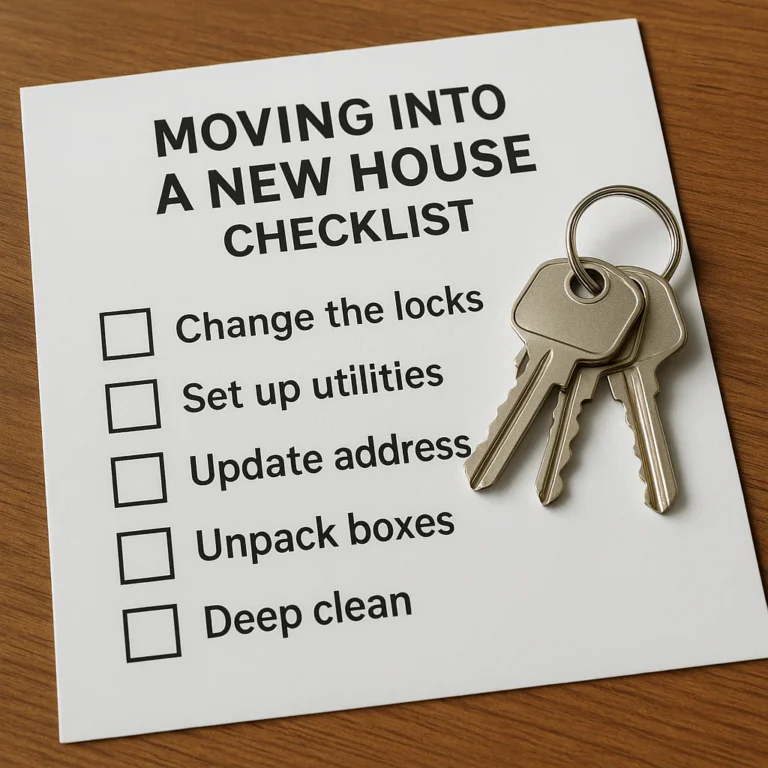
- Confirm utilities, internet, locks, smoke alarms, and essential appliances.
- Locate the electrical panel, water shutoff, and emergency contacts.
- Unpack medication and daily-use items first.
- Report delivery issues or damage using the mover’s instructions.
- Update any accounts or records that still show your old address.
For home safety information, use guidance from recognized authorities such as the U.S. Fire Administration and your local utility providers.
Weeks Two to Three: Update Records and Setle In
- Finish unpacking the rooms you use every day.
- Confirm school, healthcare, and insurance records transferred successfully.
- Find nearby pharmacies, medical providers, grocery stores, and transit options.
- Break down and recycle boxes where local rules allow.
- Keep a short list of repairs or items that need follow-up.
Unpack in order of daily usefulness, not by whichever box happens to be nearest. The kettle, towels, and work laptop usually outrank the decorative bowl.
Week Four and Beyond: Finish Unpacking and Make It Feel Like Home
- Revisit remaining boxes and decide whether each item needs a permanent home.
- Donate duplicates or items you discover you don’t need.
- Complete planned repairs and furniture arrangements.
- Update any lingering accounts or registrations.
- Save moving documents, receipts, and inventory notes for future reference.
🧠 Moving Checklist Tips for Staying Organized and Reducing Stress
A checklist reduces mental load only if it reflects what is actually happening. Review it regularly, adjust dates when plans change, and keep the next action visible.
How to Prioritize Tasks When Your Schedule Changes
When a date shifts, sort tasks into three groups:
- Must happen before moving day: Secure the move, arrange access, protect essentials, meet legal or lease deadlines.
- Must happen soon after arrival: Activate services, collect records, complete address updates.
- Can wait: Nonessential shopping, décor, and unpacking low-use items.
Mark tasks that depend on outside responses, then set a follow-up reminder. If your new-home date is uncertain, avoid locking in nonrefundable services without understanding their change and cancellation terms.
Common Moving Checklist Mistakes to Avoid
- Keeping multiple “master” lists: Pick one source of truth.
- Writing tasks without dates: Add deadlines or review dates.
- Ignoring access restrictions: Check elevators, parking, and move-in rules early.
- Packing documents or medication: Keep critical items with you.
- Underestimating decluttering: Sort before estimating shipment size.
- Skipping the inventory: Track boxes and special items as you pack.
- Assuming every mover offers the same protection: Read the terms and ask questions.
- Saving every errand for moving week: Spread tasks across the calendar.
Last-Minute Moving Stress-Savers
- Keep chargers, medications, keys, paperwork, and a change of clothes in one personal bag.
- Take photos of meter readings, empty rooms, and valuable items when useful.
- Put hardware in labeled bags and keep it with the furniture it belongs to.
- Use a clearly marked load last, unload first box for essentials.
- Keep a pen, tape, marker, and scissors accessible.
- Take a final walkthrough after the truck is loaded. Look inside closets, cabinets, storage spaces, and appliances.
- Save the mover’s phone number and delivery details where you can reach them without internet access.
❓ Moving Checklist FAQ

How do I set reminders for important moving deadlines in a checklist app?
Create a task for each deadline, assign a due date, and set a reminder far enough ahead to act—not merely to panic. For a task that depends on another person, add a follow-up date too. For example, set one reminder to request school records and another to check that they were sent.
What reminder schedule works well?
- Several weeks ahead: Booking, records, storage, and time-off requests
- One to two weeks ahead: Confirming movers, access, utilities, and care arrangements
- A few days ahead: Packing essentials, final checks, keys, and walkthroughs
Use alerts sparingly. A checklist app with dozens of low-priority notifications can become background noise faster than a neighbor’s leaf blower.
Read more about “Moving Checklist Excel: Build a Smarter Move Plan 📦”
What moving tasks should I complete each week before moving day?
Use weekly themes, but keep actual due dates attached to tasks:
| Stage | Focus |
|---|---|
| Seven weeks out | Set up the planning hub, budget, inventory, move method, and decluttering |
| Six weeks out | Book transportation, start records requests, and pack rarely used items |
| Five weeks out | Coordinate work, schools, family care, storage, and travel |
| Four weeks out | Begin address updates, utilities, and building arrangements |
| Three weeks out | Pack nonessentials and confirm donation or disposal plans |
| Two weeks out | Reconfirm the move and prepare personal essentials |
| One week out | Finish packing, protect documents, and complete home preparations |
| Moving day | Supervise loading, direct delivery, and keep paperwork accessible |
The sequence may shift for your situation. A long-distance move, a new-build delay, or a strict building reservation may require earlier action.
Read more about “How to Pack and Move in 2 Weeks: 14-Day Plan 📦”
What should I include in a moving checklist seven weeks before moving?
Include the tasks that affect later decisions:
- Moving date and budget
- DIY, professional, or hybrid move decision
- Mover research and estimate requests
- A household inventory and room measurements
- Decluttering and donation plans
- Building access and parking questions
- School, work, medical, and pet-care needs
- A shared calendar and task owner for each responsibility
If some eight-week tasks are unfinished, do them now. As Updater’s moving checklist explains, starting early can ease the workload; the practical takeaway is to catch up on high-impact tasks first, not to feel guilty about the calendar.
Read more about “Can I Schedule Utility Disconnections 7 Weeks Ahead? 🔌”
How can a moving checklist app help me stay organized during relocation?
A checklist app can centralize tasks, deadlines, and progress so you don’t have to remember every detail. Shared task lists can also clarify who is handling what, while reminders help prevent time-sensitive items from slipping.
An app can’t verify a mover’s credentials, interpret a contract for you, or decide whether your sofa fits through a hallway. Use it to organize the work, then confirm important details with the relevant company or authority.
What should I declutter or donate before packing for a move?
Start with items you haven’t used, don’t want, or can replace more easily than you can transport: duplicate kitchen tools, outgrown clothing, unused décor, broken equipment, and furniture that won’t suit the new space.
Donate items only if they meet the organization’s condition and acceptance rules. Sell items if the time and effort make sense. Recycle or dispose of unsafe and unusable belongings responsibly. Our decluttering advice can help you work through one room at a time.
Read more about “How to Create a Moving Checklist That Fits Your Move 📦”
How far in advance should I book movers for a smooth relocation?
Start researching as soon as you know your likely move date, and request estimates early enough to compare services and availability. The right lead time depends on your location, season, distance, shipment size, and schedule flexibility. Peak dates and complex moves can require more advance planning.
At seven weeks, contact movers promptly, compare written estimates, and verify interstate registration through the FMCSA where applicable. Don’t choose solely because one company can arrive first.
Read more about “How to Create a Stress-Free Moving Checklist: 24 Steps 📦”
How do I create a moving timeline for packing, utilities, and address changes?
Start with fixed dates—moving day, lease end, closing, school start, and utility handoff. Work backward from each date and add a reminder for the action that must happen first.
For example:
- Set utility end and start dates before the relevant service windows.
- Request records early enough to follow up if a provider is slow.
- Pack nonessentials first and leave daily-use items accessible.
- Submit a USPS change-of-address request through its official service.
- Add a buffer for tasks that depend on a third party.
Review the timeline once a week and whenever a major date changes. A timeline should help you adapt—not scold you for having a move that refuses to follow a spreadsheet.
Read more about “What to Do 30 Days Before You Move: 35 Steps 📦”