Support our educational content for free when you purchase through links on our site. Learn more
Moving Out Checklist: 9 Steps for the Next 7 Weeks 📦


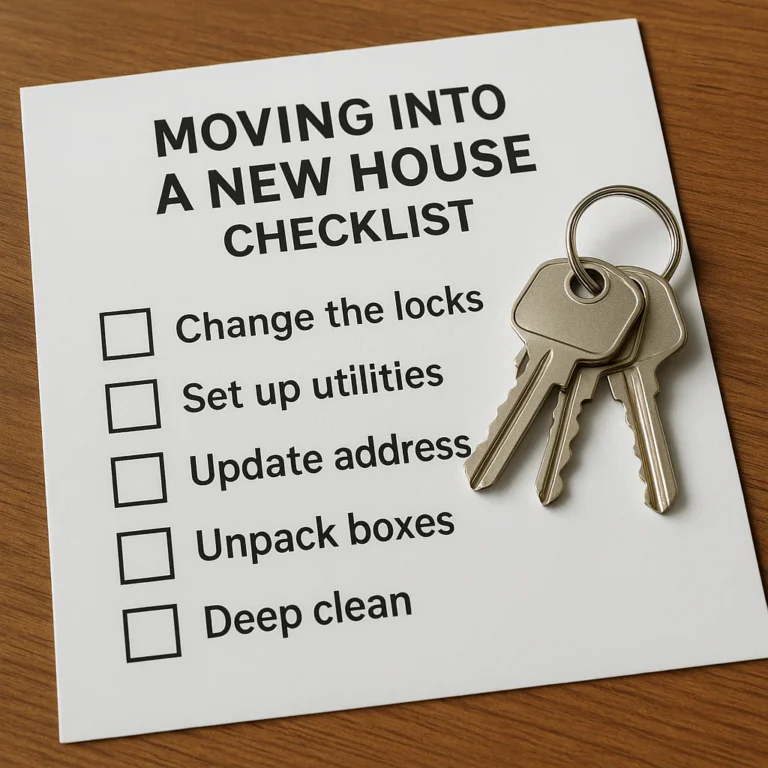
A moving out checklist 7 weeks ahead should start with your move date, budget, inventory, and moving method—then guide you through decluttering, packing, address changes, and moving-day details. Make those big decisions early, and the weeks ahead become a series of manageable jobs instead of one giant cardboard-fueled scramble.
Seven weeks can feel generous until you’re comparing movers, figuring out what to do with the extra furniture, and wondering how many boxes a kitchen can possibly need. We’ve seen one small oversight—like forgetting to reserve a building elevator—turn a smooth plan into a stressful game of “who has the property manager’s number?” This checklist helps you catch those details while there’s still time to fix them.
Key Takeaways
- Start with the essentials: confirm your move date, set a budget, build an inventory, and create one master checklist.
- Compare moving options early: review mover credentials, written estimates, coverage, access requirements, and delivery details.
- Declutter before packing: donate, sell, recycle, or responsibly dispose of items you don’t want to move.
- Follow a week-by-week timeline: pack nonessentials first, arrange address and utility changes, then confirm details before moving day.
- Keep important items with you: carry identification, medications, valuables, documents, and a first-night essentials bag.
- Adapt the plan to your move: distance, building rules, family needs, pets, and specialty items may change your schedule.
Table of Contents
- ⚡️ Quick Tips and Facts
- 📦 Your 7-Week Moving-Out Checklist at a Glance
- 🗓️ The 9-Step Moving Timeline: From Seven Weeks Out to Settling In
- 1. Seven Weeks Before Moving: Set Your Budget and Build a Plan
- 2. Six Weeks Before Moving: Compare Movers and Choose Your Moving Method
- 3. Five Weeks Before Moving: Declutter, Donate, and Sell Unwanted Items
- 4. Four Weeks Before Moving: Gather Packing Supplies and Start Packing
- 5. Three Weeks Before Moving: Update Your Address and Arrange Utilities
- 6. Two Weeks Before Moving: Confirm Details and Pack Most Belongings
- 7. One Week Before Moving: Handle Final Cleaning and Essentials
- 8. Moving Day: Follow Your Loading, Travel, and Handover Checklist
- 9. After the Move: Unpack, Inspect, and Setle Into Your New Home
- 🧭 Why a Seven-Week Moving Timeline Works
- 💰 Moving Budget, Quotes, and Hidden Costs to Plan For
- 🚚 Hiring Professional Movers vs. DIY Moving
- 🧹 Decluttering and Donation Guide Before You Move
- 📦 Packing Checklist: Supplies, Room-by-Room Tips, and Fragile Items
- 🏠 Address Changes, Utilities, and Important Service Transfers
- 📋 Moving Records, Insurance, and Documents to Keep Handy
- 🐾 Moving With Kids, Pets, or Special Circumstances
- 🧳 First-Night Essentials Box: What to Keep Within Reach
- ✅ Quick Tips for a Smother, Less Stressful Move
- 🏡 Conclusion
- 🔗 Recommended Links
- ❓ FAQ
- 📚 Reference Links
⚡️ Quick Tips and Facts
If you’re asking what to do seven weeks before moving, start with the decisions that shape everything else: your move date, budget, moving method, and what you’re taking. Our seven-weks-before-moving guide helps you turn that early planning window into a practical, manageable checklist.
Seven weeks is enough time to compare movers, measure large furniture, declutter deliberately, and avoid the late-night “why do we own fourteen mugs?” packing spiral. It’s also close enough that the calendar deserves your attention now, not “sometime after this weekend.”
| Quick fact | What we recommend |
|---|---|
| Best first move | Confirm your date and destination, then create one master checklist |
| Most useful early task | Build a room-by-room inventory before requesting estimates |
| Smartest cost-control move | Reduce the volume of items you’ll move before booking final arrangements |
| Items to protect personally | Identification, medications, financial records, jewelry, devices, and ireplaceable keepsakes |
| Planning format | Use a notebook, spreadsheet, or checklist app—but keep one source of truth |
| Moving-day backup | Pack a clearly labeled essentials bag or “first-night” box |
Seven-week move: the essentials
- Set a target moving date and identify any lease, closing, school, work, or elevator-reservation deadlines.
- Create a moving folder—digital, paper, or both—for estimates, receipts, inventory, contracts, and contact details.
- List belongings by room, marking large, fragile, valuable, or awkward-to-move items.
- Start getting estimates early. The Federal Motor Carrier Safety Administration (FMCSA) recommends checking interstate movers’ registration and understanding their estimates and consumer protections.
- Begin decluttering now. The fewer things you move, the less there is to pack, lift, transport, and unpack.
- Use a checklist you can actually maintain. The Moving Checklist™ app is designed to help you organize moving tasks and deadlines; whichever tool you choose, update it as decisions change.
A useful reality check: Seven weeks is not “too early.” It’s the point where good planning is still flexible. Wait until the final week, and even bubble wrap starts to feel like a luxury item.
📦 Your 7-Week Moving-Out Checklist at a Glance
Here’s the whole moving timeline in one scan-friendly table. We’ve included the big jobs first, then the increasingly hands-on tasks as moving day approaches.
| When | Main focus | Key tasks |
|---|---|---|
| 7 weeks out | Make the plan | Confirm dates, set a budget, create a calendar and inventory, identify special requirements |
| 6 weeks out | Choose your moving method | Compare licensed movers or truck options, check availability, review coverage and access needs |
| 5 weeks out | Reduce what you’re moving | Sort belongings, donate or sell useful items, dispose of prohibited or unwanted goods |
| 4 weeks out | Begin packing | Gather supplies, pack seasonal and rarely used items, label boxes consistently |
| 3 weeks out | Arrange the transition | Update key services, plan utility changes, arrange school, medical, and pet records |
| 2 weeks out | Confirm and consolidate | Verify bookings, pack most nonessentials, prepare appliance and furniture instructions |
| 1 week out | Finish the loose ends | Pack essentials, protect valuables, clean, confirm access, and check your final inventory |
| Moving day | Supervise and document | Photograph condition, check the inventory, keep essentials with you, complete the handover |
| After arrival | Inspect and settle in | Check deliveries, document damage promptly, set up essentials, update remaining records |
The exact order can flex. A local DIY move, an interstate relocation, and a move involving a piano all require different lead times. Use this timeline as a framework, then adapt it to your building, household, and mover’s instructions.
🗓️ The 9-Step Moving Timeline: From Seven Weeks Out to Settling In
The timeline below gives you a week-by-week moving-out checklist, starting with the decisions that protect your schedule and ending with the first days in your new home.
1. Seven Weeks Before Moving: Set Your Budget and Build a Plan
At seven weeks out, don’t start by buying a mountain of boxes. Start by finding out what you’re moving, when you’re moving, and what could complicate the job.
Step-by-step planning
- Confirm your move date or date range. Check lease dates, closing dates, work obligations, and building rules. If the date is not fixed, identify the earliest and latest realistic options.
- Set a working budget. Include transportation, labor, packing materials, storage if needed, travel, cleaning, and any special handling.
- Create a moving calendar. Add deadlines for booking, donation pickup, address updates, utility changes, packing, and key handover.
- Make a room-by-room inventory. List furniture and larger items, and flag anything heavy, fragile, valuable, or unusual.
- Measure major furniture and access points. Check doorways, stairs, elevators, hallways, and the layout of your new home.
- Create a folder for move records. Save estimates, receipts, insurance details, mover contacts, building permissions, and inventory notes in one place.
- List questions for movers. Ask about access, packing, specialty items, delivery windows, coverage, and how changes to the inventory affect the estimate.
Consumer guidance from Move.org’s moving checklist also emphasizes making a calendar, inventory, and document folder early. Sterling’s moving timeline checklist similarly recommends establishing the moving date, researching movers, and identifying fragile or oversized belongings well ahead of time.
“This early preparation will make every step afterward easier and more predictable,” Sterling says in its timeline guidance. That’s a sensible principle, though not a guarantee that your cat will approve of the boxes.
What your inventory should capture
| Item or detail | Why it matters |
|---|---|
| Item name and room | Helps estimate the load and plan box labels |
| Approximate dimensions | Reveals tight doorways, stairwells, and elevator issues |
| Fragile or high-value status | Helps you plan packing, handling, and documentation |
| Disassemble/reassemble needs | Lets you ask whether tools or labor are included |
| Destination room | Speds up unloading and reduces box reshuffling |
| Keep, donate, sell, or discard | Prevents paying to move things you no longer want |
For more planning ideas, browse our DIY moving tips and home organization advice.
2. Six Weeks Before Moving: Compare Movers and Choose Your Moving Method
Now decide who—or what—is getting your belongings from A to B. Compare professional movers, moving containers, rental trucks, and a hybrid approach. The right choice depends on distance, timing, access, the size of your home, and how much lifting you’re willing to do.
How to compare professional movers
- Ask for a written estimate based on a complete, honest inventory.
- Confirm whether it is binding, nonbinding, or subject to an on-site survey, and ask what can change the final amount.
- Check the company’s registration and complaint information, especially for interstate moves, using the FMCSA mover search.
- Ask what valuation or liability coverage is offered and what exclusions apply.
- Confirm pickup and delivery windows, cancellation terms, payment methods, and the process for reporting damage.
- Disclose items that may require special equipment or handling: pianos, safes, oversized furniture, antiques, or large appliances.
- Verify parking, loading-zone rules, elevator reservations, and any building certificate-of-insurance requirements.
Choose a moving method
| Option | Good fit for | Advantages | Trade-offs |
|---|---|---|---|
| Full-service movers | Busy households, large homes, long-distance moves | Less lifting; possible packing and furniture services | Requires careful estimate and contract review |
| Labor-only movers | People with a rental truck or container | Professional loading help without full transportation service | You coordinate vehicle, route, and timing |
| Rental truck | Smaller moves or confident DIY planners | Greater control over schedule and loading | You drive, load, and manage parking and equipment |
| Moving container | Flexible schedules or staged packing | Container can simplify loading and storage | Delivery access and loading time must be planned |
| Hybrid move | Households needing help with selected tasks | Lets you hire support where it matters most | Multiple vendors mean more coordination |
For interstate moves, FMCSA explains that movers must provide certain documents and that the type of estimate affects what you may owe. Read the agency’s Your Rights and Responsibilities When You Move before signing.
Our recommendation: Gather at least a few comparable estimates when practical, but don’t choose on the headline number alone. A clear inventory, written scope, credible credentials, and responsive communication are better signs than a quote that seems suspiciously magical.
3. Five Weeks Before Moving: Declutter, Donate, and Sell Unwanted Items
Five weeks out is a sweet spot for decluttering: enough time to arrange donation or resale, but close enough to keep decisions focused. Start with the stuff you already know you don’t use. No emotional negotiations required for the broken toaster.
A practical sorting method
Set up four categories:
- Move: Needed, useful, meaningful, or costly to replace.
- Donate: Clean and usable items another person organization can use.
- Sell: Items with enough value to justify the time and coordination.
- Recycle or discard: Broken, unsafe, stained, expired, or unsuitable for donation.
Work one room or one category at a time. For example, clear the linen closet before tackling the basement of mysterious cords.
Where to begin
- Expired pantry goods and bathroom products
- Duplicate kitchen tools and unused dishes
- Clothes and shoes that no longer fit your routine
- Old linens, towels, and worn-out pillows
- Furniture that will not fit or suit the next home
- Books, toys, and hobby supplies that have outlived their season
- Hazardous household products that movers may not transport
Donation acceptance rules differ. Check local organizations’ current requirements before dropping items off. For broader sorting strategies, see our decluttering advice.
| Item type | Practical next step |
|---|---|
| Usable clothing or household goods | Ask local charities about accepted items and drop-off rules |
| Furniture in good condition | Arrange pickup or delivery with a recipient before moving week |
| Electronics | Use a responsible electronics recycling program; erase personal data first |
| Paint, chemicals, fuel, or aerosols | Check local household hazardous-waste guidance |
| Medicines | Follow FDA disposal guidance or use an authorized take-back option |
| Broken or unsafe goods | Recycle where accepted or dispose of them according to local rules |
The EPA’s electronics donation and recycling guidance is a useful starting point for old devices. For unused medicines, check the FDA’s disposal information.
A small but powerful rule: Don’t put an item in a “maybe” pile without a decision date. Otherwise, “maybe” becomes another box, and that box moves twice.
4. Four Weeks Before Moving: Gather Packing Supplies and Start Packing
By four weeks out, you’ve made the big decisions. Now the cardboard begins its gentle takeover.
Get supplies that match your move
Useful basics include sturdy boxes in several sizes, packing paper, tape, markers, labels, stretch wrap, and protective materials for fragile items. Use specialized boxes where appropriate—for example, wardrobe boxes for hanging clothes or dish packs for breakables. Ask your mover what they provide and what you’re expected to supply.
Pack items you won’t need before moving day:
- Seasonal clothing and décor
- Books and records you’re not currently using
- Extra linens and towels
- Guest-room items
- Hobby equipment you can pause for a few weeks
- Decorative objects and framed art
Keep daily-use items accessible. We once saw a household pack the coffee maker three weeks early. The boxes were beautifully labeled; morale was not.
Label every box consistently
Use a simple system:
Room + box number + contents + priority
Example: KITCHEN – 04 – pans and baking trays – OPEN FIRST
A marker on two sides and the top is easier to read when boxes are stacked. Add FRAGILE when warranted, but don’t rely on that label as a substitute for protective packing.
Packing supply comparison
| Supply | Best for | Tip |
|---|---|---|
| Small box | Books, tools, heavy kitchen items | Keep weight manageable |
| Medium box | Pantry goods, toys, everyday objects | Balance weight with sturdiness |
| Large box | Bedding, pillows, lightweight bulky items | Avoid filling with heavy books |
| Packing paper | Dishes and general cushioning | Crumple paper to fill empty spaces |
| Bubble cushioning | Delicate or irregular breakables | Protect the item; prevent movement in the box |
| Stretch wrap | Securing drawers or soft furnishings | Don’t apply directly to surfaces that could be damaged |
| Permanent marker and labels | Room and contents identification | Keep one consistent naming system |
Pack fragile items with less drama
- Choose a sturdy box appropriate to the item’s weight.
- Cushion the bottom before adding anything.
- Wrap each piece individually.
- Place heavier items at the bottom and lighter ones above.
- Fill gaps so contents cannot shift.
- Mark the box and record especially valuable items in your inventory.
For more packing advice, explore our home organization resources and DIY moving tips.
5. Three Weeks Before Moving: Update Your Address and Arrange Utilities
Three weeks out is a good time to start the administrative transfer. Some services need more notice, and others require appointments, so check provider timelines rather than assuming everything can switch on moving day.
Address and account checklist
- Submit a change-of-address request through the USPS official change-of-address service.
- Notify your bank, credit card providers, insurance companies, employer, and relevant government agencies.
- Update subscriptions, online shopping accounts, professional memberships, and voter registration where applicable.
- Arrange internet installation or transfer.
- Schedule electricity, gas, water, trash, and sewer service at the new home.
- Confirm shutoff or transfer dates for the current address.
- Update your driver’s license and vehicle registration according to your state’s rules.
- Arrange school records, medical records, and veterinary records if needed.
Utility transition table
| Service | Current home | New home |
|---|---|---|
| Electricity | Schedule final reading or shutoff | Confirm start date and account setup |
| Gas | Arrange final bill or transfer | Check whether activation requires a technician |
| Water and sewer | Confirm responsibility and billing | Start service or verify landlord/HOA arrangement |
| Internet | Return equipment if required | Book installation and confirm compatible equipment |
| Trash and recycling | Learn final pickup rules | Find collection days and local sorting requirements |
| Security system | Cancel or transfer monitoring | Confirm installation and account access |
The USPS change-of-address page explains mail forwarding, but forwarding is a safety net—not a substitute for updating important accounts directly.
Don’t forget building logistics: Reserve the elevator, obtain parking permission, check loading hours, and ask whether movers need proof of insurance. These tasks can be the difference between a smooth arrival and a truck waiting outside while someone searches for the building manager.
6. Two Weeks Before Moving: Confirm Details and Pack Most Belongings
Two weeks out, shift from planning to verification. Contact your mover or rental provider and confirm the agreed date, arrival window, addresses, access instructions, and any special handling arrangements.
Confirmation checklist
- Reconfirm the moving date and pickup window in writing.
- Verify the pickup and delivery addresses, phone numbers, and parking instructions.
- Share changes to your inventory, including items added or removed.
- Confirm how the mover handles furniture disassembly, packing, and appliance preparation.
- Check the contract, estimate, coverage information, and payment instructions.
- Confirm elevator and loading-dock reservations.
- Make sure your new home will be accessible on arrival.
- Pack most nonessential belongings, leaving only daily-use items out.
Prepare furniture and appliances
Follow manufacturer instructions where available. Empty drawers if your mover requires it, remove loose shelves, secure cords, and protect removable parts in labeled bags. Don’t disconnect gas appliances unless you’re qualified or your provider instructs you to do so.
A good paper trail matters. Save written confirmations and photograph valuable items before packing. For interstate moves, review FMCSA’s consumer information about moving estimates and contracts.
7. One Week Before Moving: Handle Final Cleaning and Essentials
The final week can get chaotic quickly. In one account of a move documented by Life in Legings, packing fragile glasses took two hours, and the author described the home as “utter chaos.” That’s a very human reminder: the last few days are not the time to discover that every glass needs individual attention.
Your one-week checklist
- Pack everything except daily essentials and the items you’ll transport personally.
- Confirm mover arrival time, phone numbers, and route or access details.
- Separate identification, medications, jewelry, financial documents, and ireplaceable items.
- Prepare a first-night box and a personal travel bag.
- Photograph the condition of valuable belongings and your current home.
- Defrost and prepare appliances only as instructed by the manufacturer or mover.
- Clean as rooms empty, and check your lease or sale agreement for handover requirements.
- Arrange care for children and pets during loading if possible.
- Set aside cleaning supplies, trash bags, toilet paper, hand soap, and basic tools.
Life in Legings’ experience also underscores why a “last-out, first-in” box is useful. Keep essential items physically separate from the main shipment so you’re not hunting through a wall of cardboard for a phone charger.
Give yourself a buffer. Aiming to have packing nearly complete before the final day can protect you if a mover is delayed, a box takes longer than expected, or you realize the “junk drawer” has become a small civilization.
8. Moving Day: Follow Your Loading, Travel, and Handover Checklist
Moving day is easier when one person is available to answer questions and one clear list controls the handoff. If you’re moving solo, give the mover a written contact sheet and keep your phone charged.
Before loading
- Walk through the home and confirm what is moving and what is staying.
- Keep personal documents, medication, keys, wallet, phone, chargers, and valuables with you.
- Photograph furniture and any existing damage.
- Point out fragile or specialty items and explain their destination rooms.
- Confirm how the mover will record the shipment and provide inventory documents.
During loading
- Keep hallways and paths clear.
- Check boxes as they’re loaded against your inventory where practical.
- Don’t pack items movers have told you they cannot transport.
- Keep children and pets away from loading zones.
- Avoid signing documents you do not understand; ask for clarification.
Before leaving the old home
- Check closets, cupboards, storage areas, garage, balcony, and outdoor spaces.
- Confirm utilities and appliances are handled safely.
- Take photos of empty rooms and the home’s condition.
- Return keys, access cards, parking permits, and remotes as required.
- Secure windows and doors.
Arrival and unloading
- Direct boxes to the rooms written on their labels.
- Check items against the delivery inventory.
- Photograph visible damage or missing items and follow the mover’s reporting process promptly.
- Keep receipts, contracts, and claim documents together.
For interstate household-goods moves, FMCSA provides information about inventory forms, delivery, and resolving disputes. Follow your specific mover’s instructions and contract; procedures can vary.
9. After the Move: Unpack, Inspect, and Setle Into Your New Home
You made it. The boxes may still be stacked like a cardboard skyline, but the first priorities are comfort, safety, and documenting the delivery.
First 24–48 hours
- Confirm utilities, hot water, internet, and essential appliances work.
- Unpack bedding, toiletries, medications, basic kitchen items, and work or school essentials.
- Check delivered items against your inventory and note any missing or damaged belongings.
- Photograph issues and contact the mover through the process described in your documents.
- Change or rekey locks as appropriate, and test smoke and carbon-monoxide alarms.
- Locate the electrical panel, water shutoff, and emergency contacts.
- Break down empty boxes as you go to keep walkways clear.
If you’re settling into an unfamiliar area, create a short list of nearby essentials: pharmacy, grocery store, urgent care, vet, public transport, and hardware store. Unpacking the decorative bowls can wait. Knowing where the plunger is cannot.
🧭 Why a Seven-Week Moving Timeline Works
A seven-week schedule gives you time to make decisions in a useful order: plan first, reduce the load, then pack and confirm. It also gives you room to handle delays without turning every small surprise into an emergency.
Move.org recommends starting planning roughly eight weeks ahead and prioritizing early organization, including a calendar, inventory, and moving folder. Sterling’s checklist also begins around eight weeks out. If you have seven weeks, you’re slightly later than those broad planning timelines—but still early enough to do the most important work strategically.
| Planning approach | Strength | Potential weakness |
|---|---|---|
| Start around eight weeks | More flexibility for busy dates, specialty items, and long-distance planning | May feel too early for a simple local move |
| Start at seven weeks | Still allows time to compare options and declutter | Requires prompt decisions and follow-through |
| Start in the final two weeks | Works only for very small, flexible moves | Limited choice, rushed packing, and fewer options for help |
Our take: Don’t panic because a guide says eight weeks and you have seven. Prioritize decisions with external deadlines—booking, building access, utilities, school records—and tackle packing in manageable batches.
The one question worth keeping in mind is: What can create a costly or difficult surprise if you leave it until later? Usually it’s limited mover availability, access restrictions, specialty items, and an inaccurate estimate. Address those first.
💰 Moving Budget, Quotes, and Hidden Costs to Plan For
A realistic moving budget starts with the move itself, then adds the services and practical expenses that are easy to forget. We won’t pretend every move has the same cost drivers; distance, volume, labor, season, access, and services can all change the picture.
Budget categories to include
- Moving company, truck, container, or labor
- Packing supplies and optional professional packing
- Storage, if timing between homes does not line up
- Travel, lodging, meals, and pet transport
- Building fees, parking, elevator, or loading arrangements
- Appliance installation or furniture assembly
- Cleaning, repairs, and key or lock changes
- Insurance or valuation coverage
- Replacement of items you choose not to move
Compare estimates carefully
| Question | Why to ask |
|---|---|
| What inventory was used? | An incomplete inventory can make estimates less comparable |
| What services are included? | Packing, stairs, long carries, and disassembly may affect scope |
| What type of estimate is this? | The estimate type affects how charges can change |
| What coverage applies? | Understand limits, exclusions, and claims procedures |
| What access information is assumed? | Parking, stairs, elevators, and distance to the truck can matter |
| What are the cancellation and payment terms? | Helps prevent surprises and misunderstandings |
For interstate relocations, the FMCSA Protect Your Move portal explains how to check a mover and understand consumer protections. Compare like with like: same inventory, same addresses, same packing scope, and the same assumptions about access.
A red flag: A quote that is dramatically lower than others but comes with vague paperwork, pressure to pay quickly, or no credible registration information deserves extra scrutiny. Ask questions before you sign.
🚚 Hiring Professional Movers vs. DIY Moving
Neither professional movers nor DIY moving is automatically best. The right plan depends on your physical capacity, time, distance, inventory, and how much responsibility you want to take on.
| Factor | Professional movers | DIY move |
|---|---|---|
| Physical workload | Lower if labor is included | High; loading and unloading are yours or your helpers’ |
| Schedule control | Depends on the company and service window | More direct control, but you coordinate every detail |
| Packing | May be offered as an add-on | Usually your responsibility |
| Transport | The company handles driving | You manage the vehicle, route, fuel, and parking |
| Risk management | Review credentials, coverage, and contract | You arrange equipment and take on more handling responsibility |
| Best suited to | Larger households, long distances, limited time | Smaller moves, flexible schedules, and experienced DIY planners |
Choose professional movers if
- You have bulky furniture, stairs, or a long-distance route.
- Your schedule is tight or you cannot safely lift heavy items.
- You need packing, storage, or specialty-item services.
- You want a coordinated service and can verify the company and its paperwork.
DIY may suit you if
- The move is relatively small and local.
- You have reliable helpers and the right equipment.
- You’re comfortable driving and handling a rental vehicle.
- You can manage the loading plan, insurance questions, and building access.
For a deeper planning approach, see our DIY moving tips and long-distance moving resources.
One important distinction: Hiring labor does not necessarily mean hiring transportation, and renting a truck does not mean your belongings are automatically covered the way you expect. Read each agreement and ask providers to explain coverage in writing.
🧹 Decluttering and Donation Guide Before You Move
Decluttering before moving is not about achieving a magazine-ready home. It’s about making sure the boxes contain things you actually want in the next chapter.
A room-by-room decluttering plan
- Start with one small zone: one drawer, one shelf, or one category.
- Remove obvious rubbish and expired products.
- Sort remaining items into move, donate, sell, recycle, or discard.
- Set deadlines for pickups and listings.
- Photograph high-value items you plan to sell.
- Keep donation items clean, usable, and separate from trash.
- Revisit undecided items once—then make a choice.
Avoid common decluttering traps
- Don’t donate items without checking acceptance rules. Organizations may not take mattresses, damaged furniture, or certain appliances.
- Don’t sell everything. A low-value item can consume more time coordinating a sale than it’s worth.
- Don’t move hazardous materials blindly. Check local disposal rules and ask your mover about restricted items.
- Don’t leave donations until moving day. Pickup windows can fill, and not everything can go in a donation bin.
The EPA’s recycling resources help identify responsible options for electronics and other materials. For household chemicals, check your local waste authority’s guidance. Our decluttering advice has more ideas for sorting without getting stuck in nostalgia for a bread maker you haven’t used since 2019.
📦 Packing Checklist: Supplies, Room-by-Room Tips, and Fragile Items
Packing goes better when you work from least-used to most-used. Labeling by destination room helps movers and family members put boxes where they belong, rather than creating an obstacle course in the entryway.
Room-by-room packing order
| Room or category | Pack early | Keep accessible |
|---|---|---|
| Bedroom | Off-season clothing, spare bedding, décor | Daily clothes, sleepwear, medications |
| Kitchen | Specialty appliances, extra dishes, rarely used cookware | A few plates, utensils, kettle or coffee maker |
| Bathroom | Extra towels, backup toiletries | Toiletries, first aid, daily medication |
| Living room | Books, art, décor, games | Chargers, remote controls, essential devices |
| Garage or storage | Tools you won’t need, seasonal gear | Basic tool kit, items needed for final cleanup |
| Home office | Archived files, spare equipment | Laptop, work documents, chargers, internet gear |
Box safety and labeling
- Keep heavy items in small boxes and light items in larger ones.
- Cushion the bottom, sides, and top of fragile boxes.
- Fill empty space to reduce shifting.
- Label boxes on more than one side.
- Mark destination room and priority, not only “miscellaneous.”
- Keep screws and hardware in sealed, labeled bags attached to the relevant furniture where practical.
- Do not pack cash, passports, essential medication, or ireplaceable valuables in the shipment.
Products and packing tools to consider
Choose supplies based on your home and mover’s requirements. These are examples of real brands and products; check current specifications and suitability before buying.
- Duck Brand packing tape
- Scotch Heavy Duty Shipping Packing Tape
- Sharpie Permanent Markers
- Bankers Box moving boxes
Packing product trade-offs: Strong tape helps keep boxes sealed, but it doesn’t make an overloaded box safe to lift. Markers are simple and reliable, while printed labels can improve consistency across a larger move. There is no magic supply that compensates for poor packing or a box full of books and optimism.
🏠 Address Changes, Utilities, and Important Service Transfers
A move involves more than forwarding mail. Make a single list of organizations that need your new address or a service change, and record confirmation numbers in your moving folder.
Update these records and services
- USPS mail forwarding
- Banks, credit cards, and investment accounts
- Employer, payroll, and benefits providers
- Health, renters, homeowners, auto, and life insurance
- Driver’s license and vehicle registration
- Voter registration, where applicable
- Schools, childcare, and education records
- Doctors, dentists, pharmacies, and veterinarians
- Internet, mobile service, streaming, and subscriptions
- Utilities, waste collection, and local services
- Government agencies and tax-related accounts, as relevant
Use the official USPS change-of-address page and verify state-specific requirements through your state’s motor vehicle agency. Mail forwarding helps catch missed senders, but it does not update every account automatically.
Keep a transfer record
| Provider | Action | Date requested | Confirmation |
|---|---|---|---|
| Electricity | Stop/start or transfer service | Record date | Save reference number |
| Internet | Transfer or install | Record appointment | Keep equipment instructions |
| Insurance | Update address and coverage | Record effective date | Save policy confirmation |
| Medical provider | Request records or transfer care | Record request date | Confirm receipt |
| School | Transfer records and enrollment | Record deadline | Keep copies of forms |
📋 Moving Records, Insurance, and Documents to Keep Handy
Keep important documents somewhere you can reach them—not buried in a box on the truck. A small folder or secure digital backup can make a stressful day much easier.
Keep these with you
- Government-issued identification and travel documents
- Moving contract, estimates, inventory, and contact details
- Proof of insurance or coverage information
- Lease, closing, or housing documents
- Medical and prescription information
- Pet vaccination and veterinary records
- School or childcare documents
- Receipts for moving-related purchases
- Emergency contacts and utility confirmation details
Understand coverage before move day
Movers may offer different levels of valuation or liability, and homeowners or renters policies may have limits or exclusions during a move. Ask your insurer and mover what applies, what is excluded, how to document an item, and how to report a claim. Don’t assume the word “insured” answers every question.
The FMCSA guide for interstate moves explains important consumer documents and responsibilities. Keep originals of key paperwork with you and make secure copies where useful.
🐾 Moving With Kids, Pets, or Special Circumstances
A move can be logistically simple on paper and emotionally complicated in real life. Children may worry about leaving familiar routines; pets may react to boxes, strangers, and open doors. Make a plan for both.
Moving with children
- Explain the timeline in age-appropriate terms.
- Keep favorite toys, comfort items, and a change of clothes accessible.
- Arrange childcare during loading if possible.
- Label children’s boxes clearly and unpack their beds early.
- Ask the new school about records, enrollment, and transport arrangements.
Moving with pets
- Update identification tags and microchip contact information.
- Keep food, medication, bowls, leash, carrier, litter, and familiar bedding together.
- Ask your veterinarian about travel, medication, and record transfer.
- Keep pets in a secure, quiet room away from open doors and moving equipment.
- Confirm pet rules at the new home and along the route.
For interstate travel, check applicable requirements before moving animals across state lines, and use your veterinarian as the first source for health and vaccination records.
Other situations that need extra planning
- Older adults or people with mobility needs: Arrange accessible transport, medication continuity, and clear paths.
- Remote workers: Keep work equipment, backup internet plans, and essential files accessible.
- Students and teachers: Coordinate school records, calendars, and the academic schedule.
- Long-distance moves: Plan lodging, route breaks, delivery windows, and temporary essentials. See our long-distance moving guide.
🧳 First-Night Essentials Box: What to Keep Within Reach
The first night in a new home is not the time to unpack every box. It’s the time to find a towel, charge your phone, and sleep somewhere that does not require a scavenger hunt.
Pack a first-night box or bag
- Toilet paper, hand soap, and basic toiletries
- Towels, pajamas, and a change of clothes
- Bedding, pillows, and a blanket
- Phone chargers and power strips
- Medication and a basic first-aid kit
- Water bottles and simple snacks
- Cups, plates, utensils, and a small kitchen knife packed safely
- Coffee or tea supplies if that is how your household becomes human
- Trash bags, paper towels, and cleaning wipes
- Flashlight, scissors, box cutter, and a basic tool kit
- Pet food, bowls, leash, litter, and familiar comfort items
- Keys, documents, and important contact information
Label it OPEN FIRST and carry it in your own vehicle when practical. The Life in Legings account describes preparing a “last-out, first-in” box, a small idea with an outsized payoff when the rest of the home is still packed.
✅ Quick Tips for a Smother, Less Stressful Move
- Keep one master checklist. Duplicate lists quickly become a debate about which list is correct.
- Add dates and owners to tasks. “Call internet provider” is easier to finish when someone is responsible and it has a deadline.
- Photograph valuable belongings before packing. It creates a useful record of condition and contents.
- Use consistent labels. Destination room plus contents plus priority beats “stuff.”
- Make decisions early about bulky items. Measure them before arranging movers, not after they block the doorway.
- Build a small time buffer. Moving rarely unfolds exactly like the neat little calendar graphic in our imagination.
- Keep valuables and essentials with you. Don’t send ireplaceable documents or medication on the truck.
- Ask about restrictions. Movers can have rules for hazardous materials, plants, food, and other items.
- Update your plan when circumstances change. A new delivery date or building rule should be reflected in the checklist immediately.
- Use your checklist app as a living plan. Track tasks, dates, contacts, and notes together so nothing disappears into a text-message scroll.
A good moving plan does not make every part effortless. It makes the next task clear—which is often enough to turn “utter chaos” into a sequence of manageable steps.