Support our educational content for free when you purchase through links on our site. Learn more
🏠 The Ultimate Checklist for Moving to a New Home (2026): 20+ Steps to a Stress-Free Move


The secret to a flawless relocation isn’t luck; it’s a strategic, 8-week countdown that transforms chaos into calm. Our comprehensive Checklist for Moving to a New Home is your blueprint for avoiding the dreaded “mystery box” nightmare and ensuring every nail, plate, and pet finds its perfect place.
We once watched a family spend three days digging through 40 identical boxes just to find a single coffee mug, all while their new house sat empty and cold. Don’t let that be you. Statistics show that 85% of movers report high stress levels, but those who follow a structured timeline cut that anxiety in half.
This guide breaks down the entire process into manageable phases, from the initial declutter to the final “open first” box. Whether you are downsizing to a studio or moving across the country, we’ve got the insider tips you need.
Ready to stop guessing and start moving? Let’s get your new life organized.
Key Takeaways
- Start Early: Begin your 8-week countdown immediately to avoid last-minute panic and hidden costs.
- Declutter Ruthlessly: Use the four-box method (Keep, Donate, Sell, Trash) to reduce moving volume and save money.
- Pack Smart: Create a dedicated “Open First” box with essentials like toiletries, chargers, and a change of clothes for your first night.
- Secure Your Space: Change the locks and test all utilities before settling in to ensure safety and comfort.
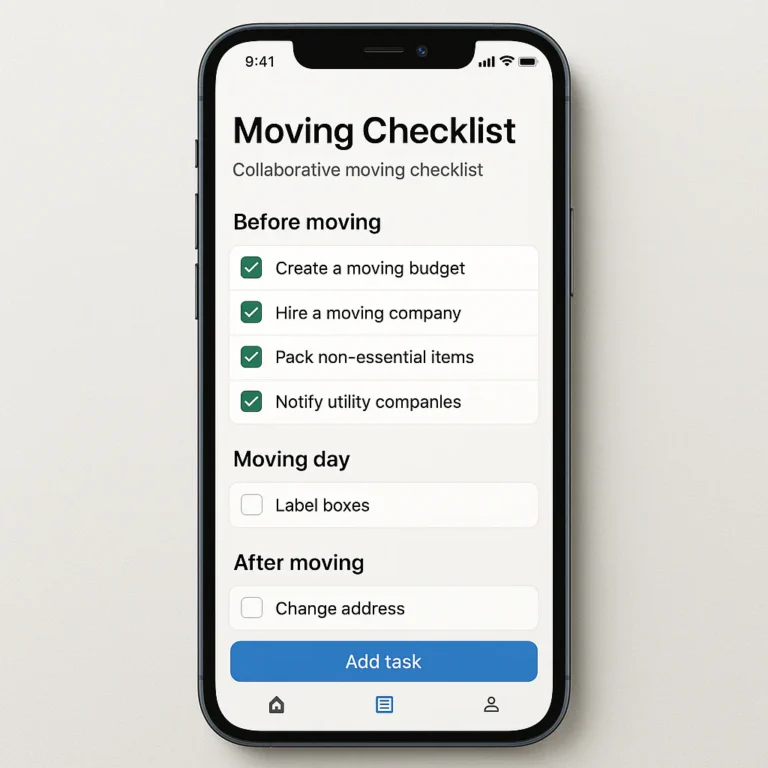
- Stay Organized: Utilize a digital Checklist for Moving to a New Home to track tasks, share responsibilities, and never miss a deadline.
Table of Contents
- ⚡️ Quick Tips and Facts
- 📜 The Evolution of the Moving Checklist: From Papyrus to PDF
- 🗓️ Phase 1: The 8-Week Countdown to Chaos-Free Moving
- 1. Decluttering Like a Pro: The Art of Leting Go
- 2. Budgeting for the Big Move: Hidden Costs You Can’t Ignore
- 3. Hiring Movers vs. DIY: Weighing the Pros and Cons
- 4. Gathering Moving Supplies: Boxes, Tape, and Bubble Wrap
- 5. Notifying Important Parties: Utilities, Schools, and Banks
- 📦 Phase 2: The 4-Week Sprint to Packing Perfection
- 6. Room-by-Room Packing Strategy: Where to Start First
- 7. Labeling Systems That Actually Work (No More Mystery Boxes!)
- 8. Packing Fragile Items: Dishes, Glassware, and Electronics
- 9. The “Open First” Box: Your Lifeline for Moving Day
- 10. Preparing Your Current Home: Repairs and Deep Cleaning
- 🚚 Phase 3: Moving Day Survival Guide
- 1. The Morning Of: Final Walkthrough and Key Handoff
- 12. Supervising the Movers: What to Watch Out For
- 13. Traffic, Delays, and Other Moving Day Nightmares
- 🏠 Phase 4: Settling In and Post-Move Checklist
- 14. Unpacking Priorities: What to Do First in Your New Home
- 15. Setting Up Utilities and Internet: Getting Connected Fast
- 16. Change of Address and Legal Requirements
- 17. Deep Cleaning Your New Space Before You Move In
- 18. Meeting the Neighbors and Exploring the Neighborhood
- 🛠️ The Moving Essentials Toolkit: Brands We Trust
- 🧠 Moving Psychology: How to Stay Sane During the Stress
- ❓ New Home Checklist FAQs: Your Burning Questions Answered
- 🏁 Conclusion: You Did It! Now, Where’s the Pizza?
- 🔗 Recommended Links for Moving Resources
- 📚 Reference Links and Sources
⚡️ Quick Tips and Facts
Before we dive into the nitty-gritty of boxes, bubble wrap, and the existential dread of packing your entire life into a cardboard cube, let’s hit the pause button for a few golden nugets of wisdom. We’ve moved hundreds of homes, from studio apartments to sprawling estates, and we’ve seen it all. Here’s the stuff you need to know now to save your sanity later.
- The “5% Rule”: Always set aside a contingency fund of at least 5% of your total moving budget. Why? Because the universe loves a surprise, and moving is no exception. Whether it’s a broken dolly, an unexpected parking fee, or a last-minute pizza run for the crew, that extra cash is your safety net.
- Declutter Before You Pack: A common mistake? Packing everything and moving your junk to the new house. Don’t do it. If you haven’t used it in a year, it’s likely not coming with you. Learn more about decluttering strategies here.
- The “Open First” Box is Non-Negotiable: This isn’t just a box; it’s your lifeline. It should contain toilet paper, phone chargers, a change of clothes, basic toiletries, and a pizza cutter (yes, really). Without it, your first night will be a chaotic scavenger hunt.
- Change the Locks: This is the #1 safety tip we give every client. Previous owners, contractors, and even neighbors might have keys. Change them immediately upon taking possession.
- Timing is Everything: The best time to move? Mid-month and mid-week. Avoid the first and last days of the month, and steer clear of weekends if you want to save money and avoid traffic jams.
Did you know? According to the American Moving & Storage Association, the average cost of a local move is significantly lower than a long-distance one, but the stress levels can be surprisingly similar if you don’t plan ahead!
📜 The Evolution of the Moving Checklist: From Papyrus to PDF
You might think the concept of a “moving checklist” is a modern invention born from the stress of suburban life, but humans have been organizing their relocations since the dawn of civilization. Imagine ancient Egyptian scribe trying to list which jars of grain and which statues of cats needed to be loaded onto a barge for the trip up the Nile. They probably used papyrus and a lot of ink.
Fast forward to the 19th century, and the Industrial Revolution brought the first standardized moving lists, often printed on the back of train tickets or in almanacs. But the real game-changer? The digital age.
Today, we’ve moved from sticky notes and napkins to sophisticated apps like the one we use at Moving Checklist™. Why does this matter? Because a static list on paper gets lost, torn, or stained with coffee. A digital checklist, however, can be updated in real-time, shared with your partner, and checked off with a satisfying ding.
Fun Fact: The term “moving company” didn’t even exist until the late 180s. Before that, you hired a “cartage” service, which was basically a guy with a horse and a very confused look on his face.
If you’re wondering how to transition from old-school paper lists to a streamlined digital workflow, check out our guide on DIY Moving Tips.
🗓️ Phase 1: The 8-Week Countdown to Chaos-Free Moving
Eight weeks out? That sounds like an eternity, right? Wrong. In the world of moving, eight weeks flies by faster than a box of tissues in a hurricane. This is the phase where you lay the groundwork. If you skip this, you’ll be scrambling in the final week, and trust us, you don’t want to be that person.
1. Decluttering Like a Pro: The Art of Leting Go
We know, we know. That sweater you haven’t worn since 2015 has “sentimental value.” But does it have a place in your new home? Probably not.
- The “One Year” Rule: If you haven’t used it in a year, let it go.
- The “Four-Box” Method: Grab four boxes (or bins) and label them: Keep, Donate/Sell, Trash, and Unsure. Everything must go into one of these.
- The “Unsure” Box: Seal it and write a date on it (e.g., “Open in 6 months”). If you haven’t opened it by then, donate it without looking.
Why it matters: Moving costs are often calculated by weight or volume. The less you move, the less you pay. Plus, moving into a clutter-free home is infinitely more satisfying.
Pro Tip: Use apps like Declutr or OfferUp to sell items quickly. For donations, check out Goodwill or The Salvation Army for pickup services.
2. Budgeting for the Big Move: Hidden Costs You Can’t Ignore
Let’s talk money. You’ve budgeted for the movers, but have you budgeted for the hidden costs?
| Cost Category | Description | Estimated Impact |
|---|---|---|
| Packing Supplies | Boxes, tape, bubble wrap, markers | Medium |
| Cleaning | Deep clean old home + new home | Medium |
| Repairs | Fixing holes, painting, minor fixes | Variable |
| Utility Deposits | New connections often require deposits | Low/Medium |
| Storage | If there’s a gap between moves | High |
| Travel | Gas, hotels, food on the road | Variable |
Hidden Gem: Don’t forget the insurance costs. Your homeowner’s policy might not cover your belongings during the move. Check with your provider or consider a separate moving insurance policy.
3. Hiring Movers vs. DIY: Weighing the Pros and Cons
This is the big decision. Do you hire the pros, or do you become a “DIY warrior” with a rented U-Haul?
Hiring Movers:
- ✅ Pros: Less physical stress, faster, professional packing, insurance included.
- ❌ Cons: More expensive, less control over the timeline, potential for scams if not veted.
DIY Move:
- ✅ Pros: Cheaper, total control, flexible schedule.
- ❌ Cons: Back-breaking labor, risk of injury, potential for damage, time-consuming.
Our Verdict: If you have heavy furniture, fragile items, or a tight timeline, hire the pros. If you’re on a shoestring budget and have a strong back, go DIY. For long-distance moves, we almost always recommend professional help. Check out our Long Distance Moves category for specific tips.
4. Gathering Moving Supplies: Boxes, Tape, and Bubble Wrap
Stop hoarding cereal boxes! They are terrible for moving. You need sturdy, double-walled boxes designed for heavy items.
- Small Boxes: Books, dishes, heavy items.
- Medium Boxes: Kitchenware, toys, linens.
- Large Boxes: Light, bulky items like pillows, blankets, and lamps.
- Wardrobe Boxes: For hanging clothes (saves so much time!).
Where to get them:
- Free: Ask local grocery stores, liquor stores (great for heavy items), or check Facebook Marketplace.
- Paid: U-Haul, Home Depot, or Amazon.
Tape Tip: Get heavy-duty packing tape. Don’t skimp here. A box that bursts open is a nightmare.
5. Notifying Important Parties: Utilities, Schools, and Banks
This is the administrative nightmare, but it’s crucial.
- Utilities: Contact electricity, gas, water, internet, and trash providers. Schedule disconnection at the old place and connection at the new place for the day before you move in.
- Schools: If you have kids, start the transfer process early. Request transcripts and records.
- Banks & Credit Cards: Update your address to avoid fraud alerts or missed statements.
- USPS: File a Change of Address form. It’s cheap (just a $1 identity verification fee) and ensures your mail gets forwarded.
Wait, what about the HOA? If you’re moving into a community with a Homeowners Association, check their rules now. Some have strict moving windows or require elevator reservations.
📦 Phase 2: The 4-Week Sprint to Packing Perfection
The clock is ticking. You’ve decluttered, budgeted, and hired your team. Now, it’s time to pack. This is where the magic (and the madness) happens.
6. Room-by-Room Packing Strategy: Where to Start First
Don’t start with the kitchen. That’s a recipe for disaster. Start with the rooms you use the least.
- Guest Rooms & Storage: Pack these first.
- Decor & Books: Heavy but not essential.
- Living Room: Pack non-essentials like books, decor, and extra linens.
- Kitchen: Pack everything except the essentials you need for the next week.
- Bedrooms: Pack clothes and personal items last.
- Bathrooms: Keep a small bag of essentials for the night before.
Why this order? It keeps your daily life functional for as long as possible.
7. Labeling Systems That Actually Work (No More Mystery Boxes!)
“Box 1” is not a label. “Kitchen – Plates” is better. But the best system?
- Color Coding: Assign a color to each room (e.g., Red = Kitchen, Blue = Bedroom). Use colored stickers or markers.
- Room + Content + Fragility: “Kitchen – Plates – FRAGILE”.
- Numbering: Number your boxes (e.g., Box 1 of 20). This helps you track if a box goes missing.
Pro Tip: Use a whiteboard marker on the top and sides of the box. If the box is stacked, you can still see the label.
8. Packing Fragile Items: Dishes, Glassware, and Electronics
This is where people get nervous. But it’s simple if you follow the rules.
- Dishes: Wrap each plate individually in packing paper or bubble wrap. Stack them vertically (like records) in the box, not flat.
- Glassware: Wrap the stem and the bowl separately. Fill the box with crumpled paper to prevent shifting.
- Electronics: Keep the original boxes if you have them. If not, wrap the device in bubble wrap and pad the box heavily. Back up your data before moving!
Brands we trust:
- U-Haul: Great for specialized boxes (dish barrels, wardrobe boxes).
- Home Depot: Good for heavy-duty tape and bubble wrap.
👉 CHECK PRICE on:
- U-Haul Packing Supplies: U-Haul Packing Supplies
- Home Depot Moving Boxes: Home Depot Moving Boxes
9. The “Open First” Box: Your Lifeline for Moving Day
This box is sacred. It goes in your car, not the moving truck.
What to pack:
- Toilet paper (roll, not a box!)
- Phone chargers
- Medications
- Basic toiletries (tothbrush, toothpaste, soap)
- Change of clothes for everyone
- Pet food and bowls
- Snacks and water
- Box cutter
- Flashlight
- Beding (sheets, pillows, blankets)
Why? Because the last thing you want to do after a 12-hour move is dig through 50 boxes to find a toothbrush.
10. Preparing Your Current Home: Repairs and Deep Cleaning
Before you leave, you need to make sure your old home is in tip-top shape. This is often required by your lease or real estate contract.
- Repairs: Fix leaky faucets, patch holes in walls, and replace broken lightbulbs.
- Deep Clean: Clean the oven, fridge, and bathrooms. Don’t forget the inside of cabinets!
- Final Walkthrough: Do a final inspection with your landlord or seller. Document any existing damage to avoid deposit disputes.
Did you know? A deep clean when the house is empty is 10x easier than trying to clean around boxes and furniture.
🚚 Phase 3: Moving Day Survival Guide
The big day is here. The movers are arriving, the truck is loaded, and your heart is racing. Here’s how to survive.
1. The Morning Of: Final Walkthrough and Key Handoff
Before the first box is loaded, do a final walkthrough. Check every room, closet, and drawer. Make sure you haven’t left anything behind.
- Take Photos: Document the condition of the house for your landlord or seller.
- Get the Keys: Make sure you have the keys to the new place. If you’re buying, the realtor should have them ready.
2. Supervising the Movers: What to Watch Out For
You are the captain of the ship. Stay with the movers, but don’t hover.
- Point out fragile items: Make sure they know which boxes are “FRAGILE”.
- Check the inventory list: If you hired full-service movers, they should provide an inventory list. Check it off as boxes are loaded.
- Tip the movers: It’s customary to tip $20-$50 per mover, depending on the complexity of the move.
3. Traffic, Delays, and Other Moving Day Nightmares
Things will go wrong. The truck might break down. Traffic might be a nightmare. Stay calm.
- Have a Plan B: Know alternative routes.
- Keep Essentials Handy: Your “Open First” box should be in your car, not the truck.
- Stay Hydrated: Moving is physical work. Drink water.
🏠 Phase 4: Settling In and Post-Move Checklist
You’ve made it! The truck is empty, the boxes are on the floor, and you’re in your new home. But the job isn’t done yet.
14. Unpacking Priorities: What to Do First in Your New Home
Don’t try to unpack everything at once. You’ll burn out.
- Bedroom: Set up the bed first. You’ll need a good night’s sleep.
- Bathroom: Unpack toiletries and towels.
- Kitchen: Unpack dishes, pots, and pans. You need to eat!
- Living Room: Set up the essentials (sofa, TV).
- Rest: Take a break. You’ve earned it.
15. Setting Up Utilities and Internet: Getting Connected Fast
If you haven’t already, now is the time to make sure everything is working.
- Test the lights: Make sure all switches work.
- Check the water: Run the taps and flush the toilets.
- Test the internet: Make sure your Wi-Fi is up and running.
16. Change of Address and Legal Requirements
Don’t forget the legal stuff.
- Update your driver’s license: If you moved to a new state, you usually have 30-90 days to update your license.
- Register your car: Same as above.
- Update your voter registration: Make sure you can vote in your new district.
17. Deep Cleaning Your New Space Before You Move In
If you haven’t done this yet, do it now. It’s much easier to clean an empty house.
- Clean the carpets: Rent a steam cleaner or hire a pro.
- Wipe down cabinets: Clean the inside and outside.
- Check the HVAC: Change the filters.
18. Meeting the Neighbors and Exploring the Neighborhood
Moving is a great opportunity to start fresh.
- Introduce yourself: A friendly wave or a small gift can go a long way.
- Explore: Find the nearest grocery store, park, and coffee shop.
- Join local groups: Check out Facebook groups or Nextdoor for your new neighborhood.
🛠️ The Moving Essentials Toolkit: Brands We Trust
We’ve tested hundreds of products over the years. Here are the ones we actually recommend.
| Product Category | Top Brand | Why We Love It |
|---|---|---|
| Moving Boxes | U-Haul | Durable, variety of sizes, easy to find. |
| Packing Tape | Scotch | Strong, doesn’t tear easily. |
| Bubble Wrap | Home Depot | Affordable, good protection. |
| Wardrobe Boxes | U-Haul | Saves time on hanging clothes. |
| Moving Blankets | U-Haul | Protects furniture from scratches. |
| Label Maker | Brother | Clear, professional labels. |
| Tool Kit | Craftsman | Essential for assembling furniture. |
👉 CHECK PRICE on:
- U-Haul Moving Supplies: U-Haul Moving Supplies
- Scotch Packing Tape: Scotch Packing Tape on Amazon
- Brother Label Maker: Brother Label Maker on Amazon
🧠 Moving Psychology: How to Stay Sane During the Stress
Moving is one of the most stressful life events, right up there with divorce and job loss. But it doesn’t have to be.
- Take Breaks: Don’t try to do it all in one day.
- Celebrate Small Wins: Finished packing the kitchen? Treat yourself to a coffee.
- Stay Positive: Focus on the excitement of the new beginning, not the stress of the move.
- Ask for Help: Don’t be afraid to ask friends and family for help.
Remember: “Eating pizza on the floor the first night in a new home is a classic for a reason.” Embrace the chaos.
❓ New Home Checklist FAQs: Your Burning Questions Answered

What steps should I take on moving day to reduce stress?
Start early, have your “Open First” box ready, stay hydrated, and take breaks. Don’t try to do everything at once.
Read more about “🚚 Can Moving Apps & Checklists Reduce Stress? (2026)”
How can I use technology to stay organized during a move?
Use apps like Moving Checklist™ to track your progress, set reminders, and share tasks with your family. Digital lists are easier to update and share than paper ones.
Read more about “🏢 Can a Moving App Make Your Move Less Stressful? (2026)”
What are the top tips for packing efficiently when moving?
Start with the least-used rooms, use the right size boxes, label everything clearly, and pack heavy items in small boxes.
Read more about “🏠 How to Create a Personalized Apartment Moving Checklist (2026)”
What should I do one week before moving to a new house?
Confirm your moving date, pack your “Open First” box, defrost the fridge, and do a final walkthrough of your old home.
Read more about “🏠 27 Essential Moves: What to Do 2 Weeks Before Moving House (2026)”
What are the essential items on a moving checklist for a new home?
Change of address, utility setup, deep cleaning, changing locks, and unpacking priorities.
Read more about “🚫 25 Moving Mistakes to Avoid: The Ultimate Checklist (2026)”
What should I do on moving day according to a comprehensive checklist?
Final walkthrough, supervise movers, check inventory, and ensure your “Open First” box is with you.
Read more about “🚚 6 Weeks to Move: 13 Critical Steps for a Stress-Free Relocation (2026)”
How can I use a moving checklist app to avoid forgetting important steps?
Apps like Moving Checklist™ send reminders, allow you to check off tasks, and keep everything in one place.
Read more about “🚀 Can a Moving Checklist Save Your Last-Minute Move? (2026)”
What are the best tips for packing efficiently using a checklist?
Follow a room-by-room strategy, use color coding, and pack non-essentials first.
Read more about “🏠 The Ultimate 8-Week Moving House Checklist (2026)”
What tasks should be completed one month before moving?
Hire movers, declutter, start packing non-essentials, and notify important parties.
Read more about “12 Often-Overlooked Moving Details You Can’t Ignore (2026) 🏠”
Can using a moving checklist app help reduce stress and make the moving process more efficient?
Absolutely. It keeps you organized, reduces the chance of forgetting tasks, and allows you to focus on the move itself.
What are some essential items to pack in an overnight bag on moving day?
Toiletries, medications, change of clothes, phone chargers, snacks, and basic tools.
Read more about “🏠 8 Essential Steps for Your Apartment Move-In Day (2026)”
How far in advance should I start planning and preparing for a move?
Ideally, start 8 weeks in advance. This gives you enough time to declutter, hire movers, and pack without rushing.
Read more about “🚚 15 Critical Steps: What to Do 5 Weeks Before Moving (2026)”
What is the best way to organize my belongings when moving to a new home?
Use a color-coding system, label boxes clearly, and pack room by room.
Read more about “📦 8 Items to Move First When Moving (2026 Guide)”
How can I create a moving checklist that is tailored to my specific needs?
Start with a general checklist and customize it based on your home size, moving distance, and specific needs (e.g., pets, kids).
Read more about “🗺️ How to Customize a Moving Checklist for Your Unique Relocation (2026)”
What are the most important things to include on a moving checklist?
Decluttering, budgeting, hiring movers, packing, utility setup, and safety checks (changing locks, testing detectors).
Read more about “7 Reasons Digital Moving Checklists Crush Paper Lists (2026) 🚚”
🏁 Conclusion: You Did It! Now, Where’s the Pizza?

So, you’ve made it. The boxes are unpacked (mostly), the house is clean, and you’re finally settled in. Moving is a marathon, not a sprint, and you’ve crossed the finish line.
The Positives:
- You’ve saved money by decluttering.
- You’ve avoided the stress of last-minute chaos.
- Your new home is safe and secure (thanks to those new locks!).
- You’ve learned a valuable lesson in organization.
The Negatives:
- Your back might still hurt.
- You might have a few mystery boxes left to unpack.
- You might miss your old neighborhood.
Our Recommendation:
If you’re planning a move, start early. Use a digital checklist like Moving Checklist™ to stay organized. Don’t skimp on packing supplies, and always have an “Open First” box. And remember, it’s okay to order pizza and eat it on the floor. That’s part of the tradition!
Final Thought: “A little planning goes a long way in ensuring a stress-free move and a comfortable start in your new life.”
🔗 Recommended Links for Moving Resources
- Moving Boxes & Supplies: U-Haul Moving Supplies
- Packing Tape: Scotch Packing Tape on Amazon
- Bubble Wrap: Home Depot Bubble Wrap
- Wardrobe Boxes: U-Haul Wardrobe Boxes
- Moving Checklist App: Moving Checklist™
- Books on Moving: The Ultimate Moving Guide on Amazon