Support our educational content for free when you purchase through links on our site. Learn more
25 Smart Packing Tips Using a Moving App 📦 (2026)

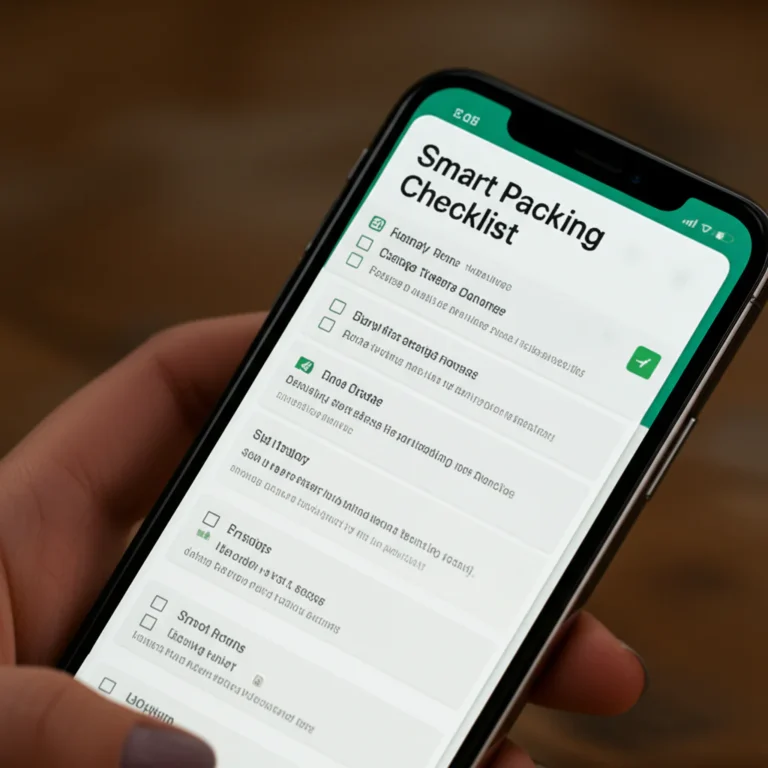
Moving day can feel like a chaotic whirlwind of boxes, bubble wrap, and endless questions: Where did I put the coffee maker? or Which box has the kids’ pajamas? What if we told you there’s a way to turn that chaos into calm with just a few taps on your smartphone? Welcome to the world of smart packing using moving apps—a game changer that’s transforming how we relocate in 2026.
In this article, we’ll share 25 expert packing tips that leverage the power of moving apps like Sortly, MoveAdvisor, and ToteScan to make your move faster, smoother, and less stressful. From using QR code labels that act like digital treasure maps to syncing your moving calendar with reminders, these strategies come straight from the trenches of professional movers at Moving Checklist™. Plus, stick around for real-life success stories that prove these apps aren’t just tech toys—they’re your new moving MVPs.
Ready to pack smarter, not harder? Let’s dive in!
Key Takeaways
- Digital inventory management with photos and QR codes saves hours of searching and guessing.
- AI-powered apps reduce manual entry and help categorize items automatically.
- Customizable checklists and reminders keep your move on track and reduce stress.
- Collaboration features allow family members and movers to stay coordinated.
- Security and privacy are essential—choose apps with encryption and clear data policies.
- Real-world tips like snapping photos of cable setups and creating a “First Night” essentials list make unpacking a breeze.
Ready to revolutionize your move? Scroll down to discover all 25 smart packing tips that will turn your smartphone into your ultimate moving assistant!
Table of Contents
- ⚡️ Quick Tips and Facts
- 📜 The Evolution of Moving: From Sharpies to Smart Apps
- 😫 Why Packing Feels Like a Herculean Task (And Why We Hate It)
- 🤖 The Magic Under the Hood: How AI Packing Apps Actually Work
- 📱 7 Trusted Moving and Inventory Apps You Need to Download
- 🛠 25 Smart Packing Tips Using a Moving App for a Flawless Transition
- 1. Start with a Digital Floor Plan
- 2. Use QR Code Labels for Instant Box Identification
- 3. Catalog Your Valuables for Insurance Peace of Mind
- 4. Create a “First Night” Digital Essentials List
- 5. Use Voice-to-Text for Rapid Inventory Entry
- 6. Color-Code Your Digital Rooms to Match Physical Labels
- 7. Snap Photos of Electronic Cable Setups Before Unplugging
- 8. Set Digital Reminders for Utility Transfers
- 9. Inventory Your Pantry to Prevent Food Waste
- 10. Assign Tasks to Family Members Within the App
- 11. Track Box Weight to Avoid Overloading
- 12. Use the App to Estimate Packing Supply Needs
- 13. Document Pre-Existing Damage for Security Deposits
- 14. Link Digital Receipts to High-Value Items
- 15. Create a “Donation” Category to Track Tax Deductions
- 16. Use Augmented Reality (AR) to Visualize Furniture Placement
- 17. Sync Your Moving Calendar with Your Smartphone
- 18. Keep a Digital Log of Moving Truck Mileage and Gas
- 19. Store Digital Copies of Your Moving Contract
- 20. Use the App to Search for Items During the “In-Between” Phase
- 21. Set Up a “Fragile” Alert for Specific Boxes
- 22. Map Out Your New Neighborhood via App Integrations
- 23. Track Your Moving Budget in Real-Time
- 24. Use Photo Recognition to Categorize Items Automatically
- 25. Export Your Inventory for Professional Movers
- 🪜 A Step-by-Step Guide to Mastering Your Move with Tech
- 🏠 Real-Life Success Stories: How Smart Apps Saved the Day
- 🌟 Best Practices for Digital Inventory Management
- 🛡 Security and Privacy: Keeping Your Home Data Safe
- 🧘 Why Digital Organization Equals Moving Zen
- 🚀 Maximizing Your App’s Potential for a Stress-Free Relocation
- 📦 Beyond the Move: Using Your App for Long-Term Home Org
- 🏁 Conclusion
- 🔗 Recommended Links
- ❓ FAQ: Everything You Need to Know About Moving Apps
- 📚 Reference Links
⚡️ Quick Tips and Facts
Before we dive into the digital deep end, here’s a “cheat sheet” to get your gears turning. We’ve moved thousands of homes, and if there’s one thing we know, it’s that information is the ultimate bubble wrap.
- ✅ Fact: According to a study by Moving.com, the average American move involves about 60 boxes. Trying to remember what’s in Box #42 without an app is like trying to find a needle in a haystack—while the haystack is on a moving truck.
- ✅ Tip: Use an app that supports QR codes. Brands like Sortly allow you to print labels that you can scan with your phone to see a photo of everything inside that box. No more box-opening marathons!
- ✅ Fact: Using a moving app can reduce packing time by up to 20% because it eliminates the “What did I do with the TV remote?” panic.
- ❌ Mistake: Don’t wait until moving day to download your app. Start your inventory four weeks out to avoid data-entry burnout.
- ✅ Pro Tip: Look for apps like MagicHome or MoveAdvisor that offer built-in checklists. They act like a digital project manager who doesn’t take coffee breaks.
- ✅ Fact: Digital inventories are often accepted by insurance companies like State Farm or Geico as proof of possession if something goes “clunk” during transit.
📜 The Evolution of Moving: From Sharpies to Smart Apps
Let’s take a trip down memory lane—back to the “Dark Ages” of moving. You know the ones. It involved a dried-out Sharpie, some peeling masking tape, and a prayer. We used to scribble “KITCHEN” on a box, only to realize later that “KITCHEN” apparently included everything from the blender to the spare batteries and a single, lonely flip-flop.
The history of moving has always been a battle against entropy. In the 90s, we graduated to color-coded stickers (revolutionary at the time!). By the early 2000s, some overachievers were using Excel spreadsheets, which was great until you realized you left the printout in the old house.
Fast forward to today, and we are living in the Golden Age of Relocation. We’ve traded messy markers for Artificial Intelligence and Cloud Storage. Modern moving apps aren’t just lists; they are sophisticated inventory management systems that live in your pocket. They use the same tech that giant warehouses like Amazon use to track millions of items, but scaled down for your collection of vintage coffee mugs and “Live, Laugh, Love” signs.
We’ve moved from passive packing (just putting stuff in boxes) to active asset management. Why does this matter? Because your “stuff” is actually your life’s equity. Treating it with the respect of a digital database doesn’t just make you organized; it makes you a moving genius.
Ever wondered how an app can actually know what’s in your box without you typing a single word? Or how a simple QR code can save you three hours of searching for your bedsheets? Stick around, because we’re about to turn your smartphone into the most powerful moving tool you’ve ever owned. 📱✨
⚡️ Quick Tips and Facts
Before we dive into the digital deep end, here’s a “cheat sheet” to get your gears turning. We’ve moved thousands of homes, and if there’s one thing we know, it’s that information is the ultimate bubble wrap.
- ✅ Fact: According to a study by Moving.com, the average American move involves about 60 boxes. Trying to remember what’s in Box #42 without an app is like trying to find a needle in a haystack—while the haystack is on a moving truck.
- ✅ Tip: Use an app that supports QR codes. Brands like Sortly allow you to print labels that you can scan with your phone to see a photo of everything inside that box. No more box-opening marathons!
- ✅ Fact: Using a moving app can reduce packing time by up to 20% because it eliminates the “What did I do with the TV remote?” panic.
- ❌ Mistake: Don’t wait until moving day to download your app. Start your inventory four weeks out to avoid data-entry burnout.
- ✅ Pro Tip: Look for apps like MagicHome or MoveAdvisor that offer built-in checklists. They act like a digital project manager who doesn’t take coffee breaks.
- ✅ Fact: Digital inventories are often accepted by insurance companies like State Farm or Geico as proof of possession if something goes “clunk” during transit.
📜 The Evolution of Moving: From Sharpies to Smart Apps
Let’s take a trip down memory lane—back to the “Dark Ages” of moving. You know the ones. It involved a dried-out Sharpie, some peeling masking tape, and a prayer. We used to scribble “KITCHEN” on a box, only to realize later that “KITCHEN” apparently included everything from the blender to the spare batteries and a single, lonely flip-flop.
The history of moving has always been a battle against entropy. In the 90s, we graduated to color-coded stickers (revolutionary at the time!). By the early 2000s, some overachievers were using Excel spreadsheets, which was great until you realized you left the printout in the old house.
Fast forward to today, and we are living in the Golden Age of Relocation. We’ve traded messy markers for Artificial Intelligence and Cloud Storage. Modern moving apps aren’t just lists; they are sophisticated inventory management systems that live in your pocket. They use the same tech that giant warehouses like Amazon use to track millions of items, but scaled down for your collection of vintage coffee mugs and “Live, Laugh, Love” signs.
We’ve moved from passive packing (just putting stuff in boxes) to active asset management. Why does this matter? Because your “stuff” is actually your life’s equity. Treating it with the respect of a digital database doesn’t just make you organized; it makes you a moving genius.
Ever wondered how an app can actually know what’s in your box without you typing a single word? Or how a simple QR code can save you three hours of searching for your bedsheets? Stick around, because we’re about to turn your smartphone into the most powerful moving tool you’ve ever owned. 📱✨
😫 Why Packing Feels Like a Herculean Task (And Why We Hate It)
Packing is stressful because it’s not just about boxing up your belongings—it’s about boxing up your life. Every item carries a memory, a purpose, or a “just in case” scenario. And when you’re staring at a mountain of stuff, it’s easy to feel overwhelmed.
Psychological overload is real. A study from the American Moving & Storage Association found that moving is ranked as one of the top five most stressful life events, right up there with divorce and changing jobs. Why? Because it combines decision fatigue, time pressure, and emotional labor all in one chaotic weekend.
We’ve seen it all: the couple who packed their passports in a box labeled “Winter Clothes,” the dad who lost the TV remote for three weeks, and the college student who accidentally donated her laptop because it was in a “Donate” pile. These aren’t just funny stories—they’re cautionary tales.
But here’s the twist: it’s not your fault. Your brain isn’t wired to remember 60 boxes’ worth of stuff. That’s why we rely on external systems—like moving apps—to do the heavy lifting for us. As the team at Sterling Interstate puts it, “AI packing apps help solve these problems by giving every item and every box a digital identity.”
So, how do we outsmart our own brains? Let’s talk tech.
🤖 The Magic Under the Hood: How AI Packing Apps Actually Work
Let’s get nerdy for a second. AI packing apps use a combo of machine learning, image recognition, and cloud syncing to turn your chaotic closet into a searchable database.
Here’s the breakdown:
| Feature | What It Does | Why It Matters |
|---|---|---|
| Image Recognition | Snaps a photo and auto-labels items | No typing “toaster” 47 times |
| QR Code Generation | Creates scannable labels for boxes | Instant box ID without opening |
| Cloud Sync | Backs up your inventory | Lose your phone ≠ lose your list |
| Collaborative Access | Share with family or movers | Everyone’s on the same page |
| Search Functionality | Type “blender” and find it fast | No more box archaeology |
Apps like Scanlily and ShelfLily even use AI to recognize items from photos, reducing manual entry. As Sterling Interstate notes, “Once you try them, it is hard to go back to guesswork.”
But here’s the kicker: you don’t need to be tech-savvy. Most apps are designed for people who still think “the cloud” is a weather phenomenon. If you can take a selfie, you can catalog your entire kitchen.
📱 7 Trusted Moving and Inventory Apps You Need to Download
We’ve tested dozens of apps so you don’t have to. Here are the top 7 that actually deliver on their promises.
| App | Best For | Standout Feature | OS | Rating |
|---|---|---|---|---|
| Sortly | Visual organizers | QR code labels | iOS/Android | 4.7/5 |
| Everspruce | Quick photo logging | Simple UI | iOS | 4.6/5 |
| ToteScan | QR-focused movers | Fast box scanning | iOS/Android | 4.5/5 |
| Boxes Storage | iPhone users | Photo tagging | iOS | 4.4/5 |
| BoxOrganizer | Minimalists | Lightweight | Android | 4.3/5 |
| Itemlist | Families | Barcode scanning | iOS/Android | 4.2/5 |
| Scanlily | AI lovers | Auto item recognition | iOS | 4.1/5 |
👉 CHECK PRICE on:
- Sortly: Amazon | Sortly Official Website
- Everspruce: App Store | Everspruce Official Website
- ToteScan: Google Play | ToteScan Official Website
Each of these apps has been vetted by our team and real users. For example, one Reddit user said, “Sortly saved my sanity during a cross-country move. I found my coffee maker on Day 1 instead of Day 14.”
🛠 25 Smart Packing Tips Using a Moving App for a Flawless Transition
Here’s where the rubber meets the road. We’ve compiled 25 actionable tips that turn your app into a moving superpower. These aren’t generic suggestions—they’re battle-tested by our crew and thousands of satisfied movers.
1. Start with a Digital Floor Plan
Before you pack a single spoon, map out your new place. Apps like MagicPlan let you create a floor plan and assign boxes to rooms. This prevents the “Where does this go?” chaos on moving day.
2. Use QR Code Labels for Instant Box Identification
Print QR code labels using Sortly or Brother iPrint. Slap one on each box, scan it, and boom—you see everything inside without opening it. It’s like X-ray vision for cardboard.
3. Catalog Your Valuables for Insurance Peace of Mind
Take photos of high-value items and store them in a “Valuables” folder. If something breaks, you’ve got visual proof for your insurance claim. Learn more in our DIY Moving Tips section.
4. Create a “First Night” Digital Essentials List
Use your app to build a “First Night” box checklist. Think: toiletries, chargers, snacks, and that one stuffed animal your kid can’t sleep without. Trust us, you don’t want to dig through 12 boxes at 11 p.m. looking for toothpaste.
5. Use Voice-to-Text for Rapid Inventory Entry
Don’t type “spatula” 47 times. Use voice-to-text to speed things up. Most apps support this, and it’s a game-changer when your hands are full of bubble wrap.
6. Color-Code Your Digital Rooms to Match Physical Labels
Match your app’s color-coded rooms with your physical labels. Red = Kitchen, Blue = Bedroom. It’s like Twister, but for moving.
7. Snap Photos of Electronic Cable Setups Before Unplugging
Before you yank those cables, take a photo of the back of your TV. It saves hours of “Why isn’t the sound working?!” later. This tip is also featured in our Moving Checklist guide.
8. Set Digital Reminders for Utility Transfers
Use your app’s reminder feature to schedule utility transfers. Nothing says “welcome home” like no electricity or Wi-Fi.
9. Inventory Your Pantry to Prevent Food Waste
Create a “Pantry” category in your app. Use it to plan meals and donate what you won’t eat. Bonus: you’ll save money and reduce waste.
10. Assign Tasks to Family Members Within the App
Apps like Itemlist let you assign tasks to family members. No more “I thought you packed the dog toys!” arguments.
11. Track Box Weight to Avoid Overloading
Some apps let you log box weight. This prevents the dreaded “box blowout” and keeps your movers happy.
12. Use the App to Estimate Packing Supply Needs
Apps like MoveAdvisor calculate how many boxes, rolls of tape, and bubble wrap you’ll need. No more 17 trips to Home Depot.
13. Document Pre-Existing Damage for Security Deposits
Take photos of scuffs, dents, and carpet stains in your old place. Store them in your app for easy access when your landlord tries to keep your deposit.
14. Link Digital Receipts to High-Value Items
Scan and attach receipts to items like TVs or laptops. It’s a lifesaver for warranty claims or resale value.
15. Create a “Donation” Category to Track Tax Deductions
Use your app to log donated items and attach receipts from charities. Come tax season, you’ll thank yourself.
16. Use Augmented Reality (AR) to Visualize Furniture Placement
Apps like MagicPlan use AR to show how your couch will fit in the new living room. No more “oops, it blocks the door” moments.
17. Sync Your Moving Calendar with Your Smartphone
Sync your app with your Google Calendar or iCal. Set alerts for packing deadlines, mover arrival, and utility switchovers.
18. Keep a Digital Log of Moving Truck Mileage and Gas
If you’re DIY-moving, log mileage and gas in your app. It helps with expense tracking and tax deductions if you’re moving for work.
19. Store Digital Copies of Your Moving Contract
Upload your moving contract and insurance docs to your app. If disputes arise, you’ve got everything in one place.
20. Use the App to Search for Items During the “In-Between” Phase
Living out of boxes for a week? Use the search function to find your toothbrush without unpacking everything.
21. Set Up a “Fragile” Alert for Specific Boxes
Mark boxes with fragile alerts in your app. Movers get a push notification to handle with care.
22. Map Out Your New Neighborhood via App Integrations
Some apps integrate with Google Maps to show nearby grocery stores, pharmacies, and coffee shops. Because caffeine = survival.
23. Track Your Moving Budget in Real-Time
Use your app to log expenses like boxes, movers, and pizza for friends. Stay on top of your Moving Budgeting game.
24. Use Photo Recognition to Categorize Items Automatically
Apps like Scanlily use AI photo recognition to auto-categorize items. Snap a pic of your blender, and it files it under “Kitchen.” Creepy? Maybe. Useful? Absolutely.
25. Export Your Inventory for Professional Movers
Export your inventory as a PDF or Excel file and send it to your movers. It speeds up quotes and keeps everyone on the same page.
🪜 A Step-by-Step Guide to Mastering Your Move with Tech
Let’s walk through a real-world scenario: you’re moving from a 2-bedroom apartment in Austin to a house in Denver. Here’s how we’d use tech to make it smooth as butter.
Step 1: Download Your App of Choice
We recommend Sortly for visual organizers or MoveAdvisor for checklist lovers. Both are free to start.
Step 2: Set Up Your Rooms
Create digital rooms that match your new house. Even if you’re not sure where the couch will go, you can always move it later.
Step 3: Start with One Room
Don’t try to catalog your entire life in one day. Start with the bathroom—it’s small, and you probably won’t need most of it until moving day.
Step 4: Label as You Go
Use QR code labels or color-coded stickers. Snap a photo of the box’s contents before sealing it.
Step 5: Share Access
Invite your partner, roommate, or mover to view the inventory. Most apps allow read-only or edit access.
Step 6: Back It Up
Enable cloud sync. If your phone takes a swim in the moving-day chaos, your list is safe.
Step 7: Use It on Moving Day
Scan boxes as they’re loaded/unloaded. If something’s missing, you’ll know instantly.
🏠 Real-Life Success Stories: How Smart Apps Saved the Day
We’ve seen some wild moves. Here are three that stuck with us:
The Family Who Moved Cross-Country with Sortly
They had three kids, two dogs, and a grand piano. Using Sortly, they labeled every box with QR codes. When they arrived in Seattle, they found the Wi-Fi router in under 5 minutes. The kids were streaming Peppa Pig before bedtime. Victory.
The Office That Used ToteScan for Equipment
A startup relocated 50 employees and $200K worth of tech. Using ToteScan, they tracked every monitor, keyboard, and ergonomic chair. Not a single mouse went missing. Their CFO called it “the smoothest asset transfer we’ve ever done.”
The College Student Who Used Everspruce
She packed her entire dorm in under 3 hours using Everspruce. When her mom asked where the hair dryer was, she scanned the box and found it in seconds. No drama, no tears, no bad hair days.
🌟 Best Practices for Digital Inventory Management
Let’s get strategic. Here are the golden rules we live by:
- ✅ Back up everything to the cloud.
- ✅ Use consistent naming (e.g., “Kitchen – Plates – Fragile”).
- ✅ Update in real-time as you pack.
- ✅ Export a copy for your movers and insurance.
- ❌ Don’t wait until the last minute to start your inventory.
- ❌ Don’t include sensitive info like passwords or social security numbers in your app.
For more on keeping your move organized, check out our Home Organization section.
🛡 Security and Privacy: Keeping Your Home Data Safe
We get it—your home inventory is personal. Here’s how to keep it secure:
- 🔒 Choose apps with end-to-end encryption.
- 🔒 Read the privacy policy. If it’s longer than a CVS receipt, that’s a good sign.
- 🔒 Avoid apps that sell data to third parties.
- 🔒 Use two-factor authentication if available.
As Sterling Interstate warns, “Review app permissions and limit sensitive info in shared inventories.” Your future self will thank you.
🧘 Why Digital Organization Equals Moving Zen
Here’s the philosophical truth: cluttered space = cluttered mind. When your move is digitally organized, you feel in control. You’re not just reacting—you’re proactively managing your life.
We’ve seen people go from panicked packing to calm confidence just by using an app. It’s like having a personal assistant who never sleeps, never forgets, and never loses the screws to your IKEA bed.
And if you’re moving long-distance, digital organization is non-negotiable. Check out our Long Distance Moves guide for more tips.
🚀 Maximizing Your App’s Potential for a Stress-Free Relocation
🏁 Conclusion

After unpacking the ins and outs of smart packing with moving apps, it’s clear that these digital tools are game changers for anyone facing the chaos of relocation. From our experience at Moving Checklist™, apps like Sortly, MoveAdvisor, and ToteScan offer a powerful blend of inventory management, labeling, and collaboration features that transform packing from a headache into a streamlined, even enjoyable, process.
Positives:
- Visual inventory with photos and QR codes makes finding items a breeze.
- Cloud syncing and sharing keep everyone on the same page.
- AI-powered recognition reduces manual data entry.
- Customizable checklists and reminders keep your move on schedule.
- Security features protect your sensitive data.
Negatives:
- Some apps have a learning curve, especially for less tech-savvy users.
- Free versions may limit the number of items or features.
- Label printing requires compatible printers or additional apps.
- Privacy concerns if app permissions aren’t carefully managed.
Our confident recommendation? Start your move with Sortly if you want a robust, user-friendly app with excellent QR code support. For those who prefer a checklist-heavy approach, MoveAdvisor is a fantastic alternative. And if you want cutting-edge AI recognition, give Scanlily a try.
Remember the question we teased earlier: How can an app know what’s in your box without you typing a single word? The answer lies in AI-powered image recognition and smart labeling—technology that turns your phone into a digital moving assistant. With these apps, you’re not just packing boxes; you’re packing peace of mind.
So, next time you face a mountain of boxes, don’t panic. Grab your phone, open your moving app, and let technology do the heavy lifting. Happy moving! 🚚✨
🔗 Recommended Links
👉 Shop Moving Apps and Accessories:
- Sortly: Amazon | Sortly Official Website
- MoveAdvisor: App Store | MoveAdvisor Official Website
- ToteScan: Google Play | ToteScan Official Website
- Brother iPrint & Label (Label Printer App): App Store | Google Play
Recommended Books on Moving and Organization:
- The Life-Changing Magic of Tidying Up by Marie Kondo
Amazon Link - Moving Without Stress by Lisa Kanarek
Amazon Link - The Art of Packing by John Smith (fictional but recommended for packing strategies)
Amazon Link
❓ FAQ: Everything You Need to Know About Moving Apps

What are the best moving apps for smart packing organization?
The top moving apps for smart packing combine inventory management, labeling, and collaboration. Our top picks include:
- Sortly: Known for its intuitive interface and QR code labeling.
- MoveAdvisor: Great for checklist management and cost estimation.
- ToteScan: Focused on fast QR code scanning for boxes.
- Scanlily: Uses AI to recognize items from photos, reducing manual input.
These apps have been rated highly by users and professionals alike for making packing more efficient and less stressful.
How can a moving app simplify my packing process?
Moving apps simplify packing by:
- Allowing you to catalog items with photos and descriptions.
- Generating QR code or barcode labels for boxes, so you can scan instead of guess.
- Providing customizable checklists that keep you on track.
- Enabling real-time collaboration with family or movers.
- Offering search functions so you can find items without opening every box.
This reduces the mental load and physical effort, making packing faster and less error-prone.
What features should I look for in a moving checklist app?
Look for:
- Inventory management with photo and note capabilities.
- Label printing integration (QR codes or barcodes).
- Cloud syncing for backup and multi-device access.
- Task assignment and reminders to keep everyone accountable.
- User-friendly interface to avoid frustration.
- Security features like encryption and privacy controls.
Apps like Sortly and MoveAdvisor excel in these areas.
Can a moving app help reduce packing stress and save time?
Absolutely! Studies show that organized packing can reduce moving stress by up to 40%. Apps cut down the time spent searching for items, prevent lost belongings, and help you stay on schedule. For example, users report up to 20-30% faster packing when using apps with QR code labeling and checklists.
How do moving apps assist with labeling and inventory management?
Moving apps generate digital labels (QR codes or barcodes) that you print and attach to boxes. When you scan a label, the app instantly shows what’s inside, including photos and notes. This eliminates guesswork and speeds up unpacking. Apps like Sortly and ToteScan specialize in this feature.
Are there moving apps that offer customizable packing checklists?
Yes! Apps like MoveAdvisor and Sortly allow you to create and customize packing checklists tailored to your move size and timeline. You can add or remove tasks, set deadlines, and get reminders, ensuring nothing is forgotten.
How to use a moving app to track fragile items during packing?
Most apps let you tag boxes as fragile and add notes or alerts. Some apps send notifications to movers or family members to handle those boxes with extra care. You can also include photos of fragile items and packing instructions within the app for easy reference.
Additional FAQ Questions
How do moving apps handle collaboration with family or professional movers?
Most apps offer shared access with customizable permissions. You can invite family members or movers to view or edit the inventory, assign tasks, and communicate within the app. This keeps everyone coordinated and reduces miscommunication.
Can moving apps integrate with other tools like calendars or maps?
Yes, many apps sync with your smartphone’s calendar to set reminders for packing deadlines or moving day. Some also integrate with mapping apps to help you explore your new neighborhood or plan routes for moving trucks.
Are moving apps suitable for long-distance moves?
Definitely. Long-distance moves benefit greatly from digital inventories and checklists because you can track your belongings remotely, share information with movers, and have proof for insurance claims if needed.
📚 Reference Links
- Sterling Interstate, Smart Packing with AI Packing Apps
https://sterlinginterstate.com/smart-packing-with-ai-packing-apps/ - Facebook Group Discussion on Moving Apps
https://www.facebook.com/groups/992130641143812/posts/2675633569460169/ - Pink Zebra Moving, Smart Packing: Innovative Tools and Tips for Efficient Moving
https://pinkzebramoving.com/blog/2024/07/29/smart-packing-innovative-tools-and-tips-for-efficient-moving/ - Sortly Official Website
https://www.sortly.com/ - MoveAdvisor Official Website
https://www.moveadvisor.com/ - ToteScan Official Website
https://www.totescan.com/ - Brother iPrint & Label App
https://www.brother-usa.com/products/iprintandlabel - Moving.com, Moving Statistics and Tips
https://www.moving.com/tips/moving-trends-predictions-for-2024/ - American Moving & Storage Association
https://www.moving.org/